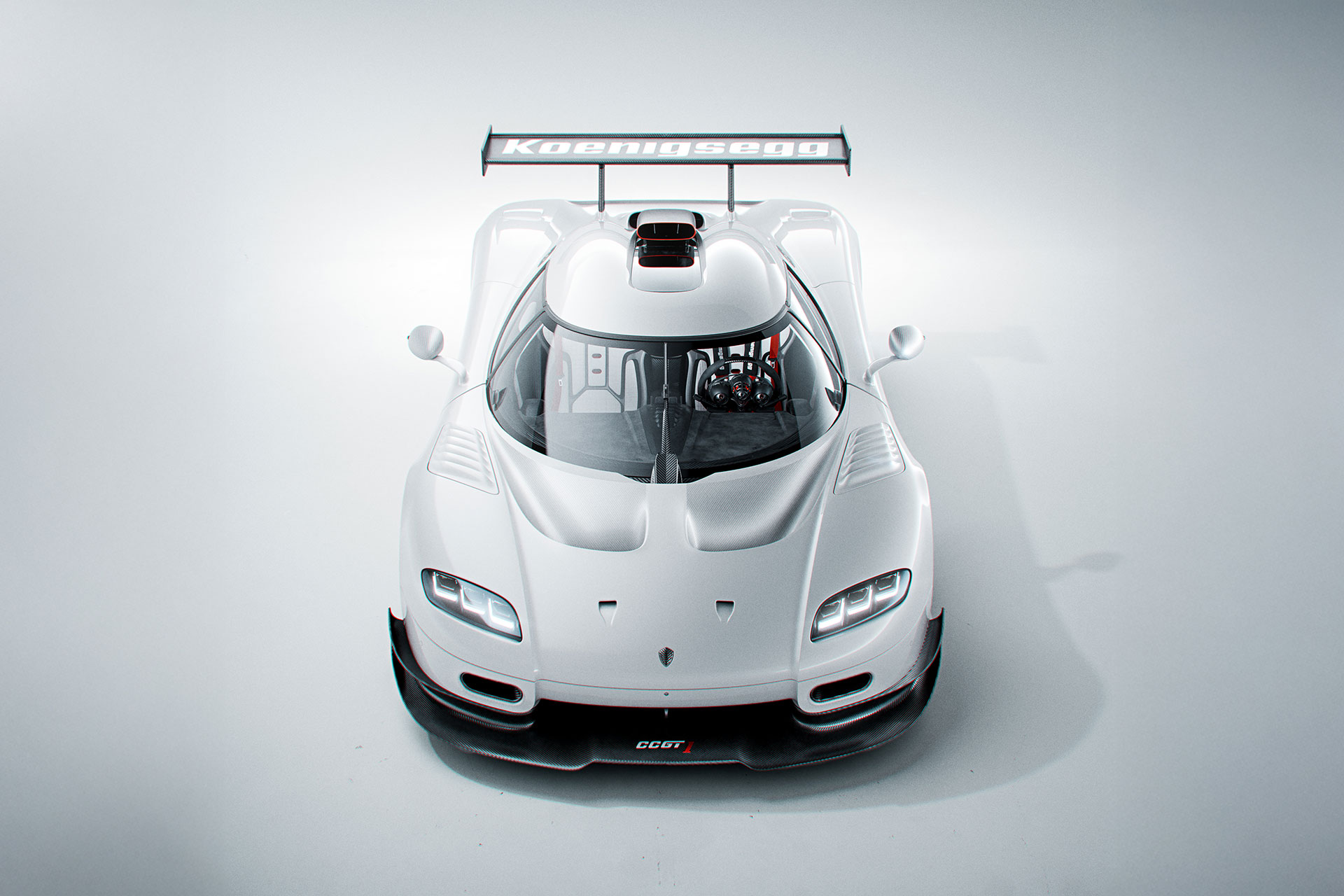
Koenigsegg has revealed the CCGT1, a road-legal Megacar built as a tribute to the company’s canceled CCGT GT1 endurance racing project, limited to 70 examples that were all allocated before the car’s public debut. Built on the CC850 platform, which itself pays homage to the CC8S, the CCGT1 arrives alongside Koenigsegg’s first factory-designed optional track package, and the reveal is timed to the original CCGT’s recent approval for historic racing.
The CCGT program dates back to the company’s earliest days, when Christian von Koenigsegg studied the Le Mans GT1 regulations while designing the first CC prototype and scaled its width and frontal area to fit within the class rules. Working with engineer and fabricator Dag Bölenius, Koenigsegg built the CCGT to roughly 2,205 pounds (1,000 kg), well under the class limit of 2,425 pounds (1,100 kg), leaving room to position ballast for optimal balance. The car used a naturally aspirated 5.0-liter Koenigsegg V8 making 600 hp in race trim, the GT1 class maximum, driving the rear wheels through a magnesium sequential gearbox, with an aero package generating more than 1,323 pounds (600 kg) of downforce. Test driver Loris Bicocchi set the car up and it showed competitive pace from its first laps, but two months into shakedown testing the FIA rewrote the GT1 regulations to admit only higher volume production cars. The program was canceled before the car turned a competitive lap, and only one CCGT was ever built. It spent 15 years with its first owner before being offered for sale at Goodwood Festival of Speed in 2024, and its current US-based owner has had it refurbished by the Koenigsegg Legend Division ahead of a competitive debut in the GT1 historic class.
Power in the CCGT1 comes from Koenigsegg’s twin-turbo V8 producing 1,280 hp on pump fuel and 1,600 hp on E85, with the in-house engine management system able to run any blend of the two. A new roof scoop feeds an enlarged oil cooler along with a dedicated cooling system for the dampers, both aimed at consistency over sustained track sessions. The nine-speed Light Speed Transmission is controlled through a new interface called Koenigsegg Sequential Shift, standard on every CCGT1, which pairs a clutch pedal for take-off with ignition cut for clutchless shifts, mirroring the original CCGT. The shifter sits within inches of the steering wheel, and a four-position dial ahead of it labeled ASMR governs Auto, Sequential, Manual, and Reverse modes. Buyers who prefer a gated manual can option the CC850’s Engage Shift System, a six-speed unit that uses six of the transmission’s nine gears in Manual mode while retaining nine-speed automatic operation in D. Paddle shifting and automatic operation are available with both configurations.
Nearly every body panel has been redesigned from the CC850, with only the doors and removable roof carrying over. The most visible change is the large active rear wing, which has 30 degrees of automatic adjustment and transitions between low-drag, air-brake, and high-downforce settings without driver input. Balancing it are a large front splitter, active underbody flaps, and a sculpted underfloor using strakes to generate low-pressure vortices, feeding a bespoke rear diffuser. Total downforce reaches 1,764 pounds (800 kg) at 155 mph, which Koenigsegg says places the CCGT1 between the Jesko Attack and Sadair’s Spear for peak downforce, with Sadair’s Spear producing 30 percent more than the Attack. According to CFD engineer Andreas Tjernberg Persson, who led the aerodynamic program, the floor does the majority of the work despite the wing’s visual prominence, and the car was tuned specifically for accessible downforce at lower speeds, with load bleeding away at higher speeds to protect tire loads on straights.
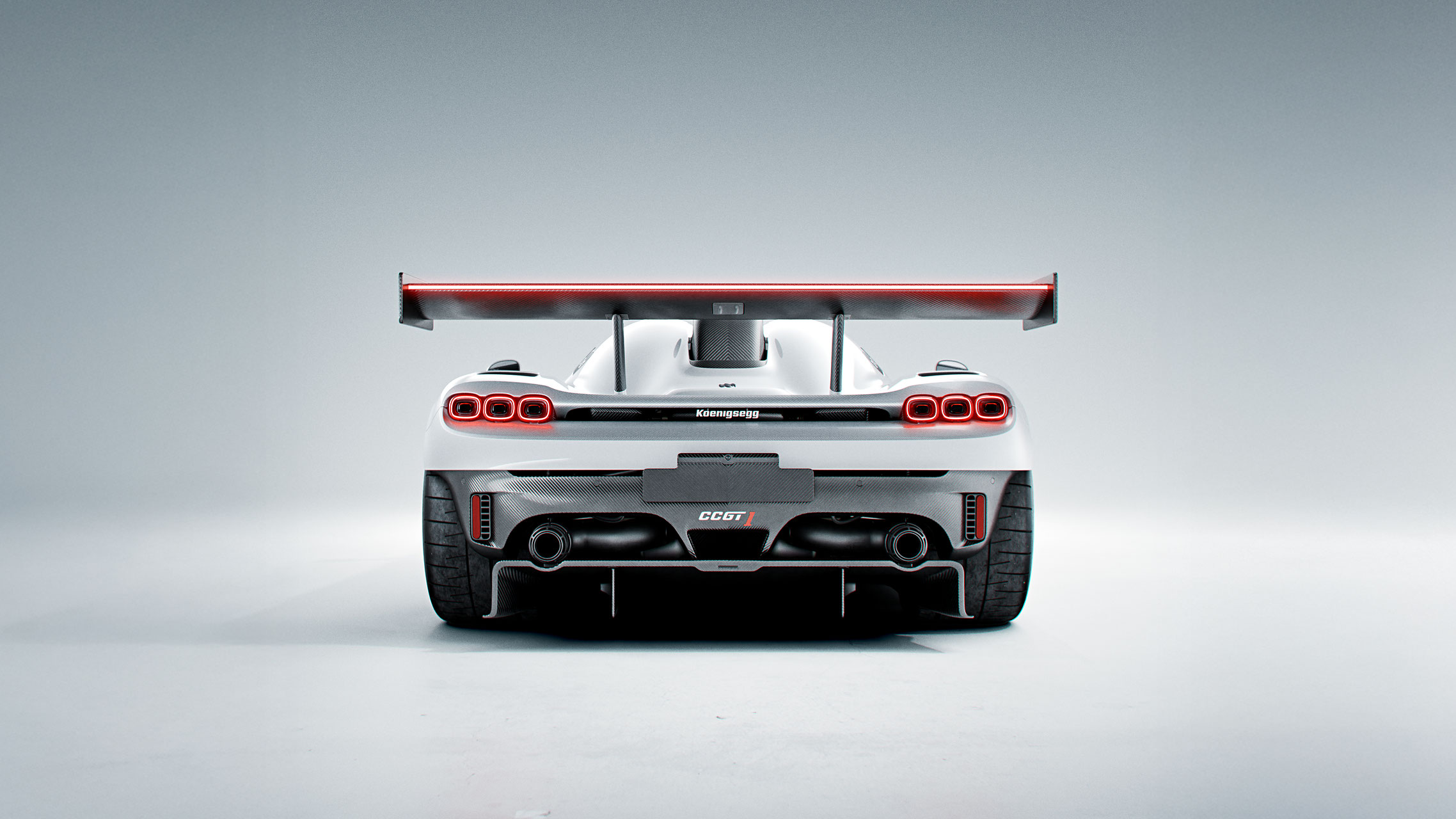
The CCGT1 also marks the return of white carbon fiber to Koenigsegg, now called Ghost Fibre. The company first showed the material on the Trevita in 2009 but halted production because it proved so difficult to execute. Ghost Fibre is a ground-up development described as a crystal white aramid and carbon matrix, adding ballistic protective characteristics and a sound-deadening effect while allowing the panels to be lighter than a traditional carbon fiber lay-up. New optional three-spoke Aircore carbon fiber wheels, among the lightest Koenigsegg has produced, carry a retro-inspired design.
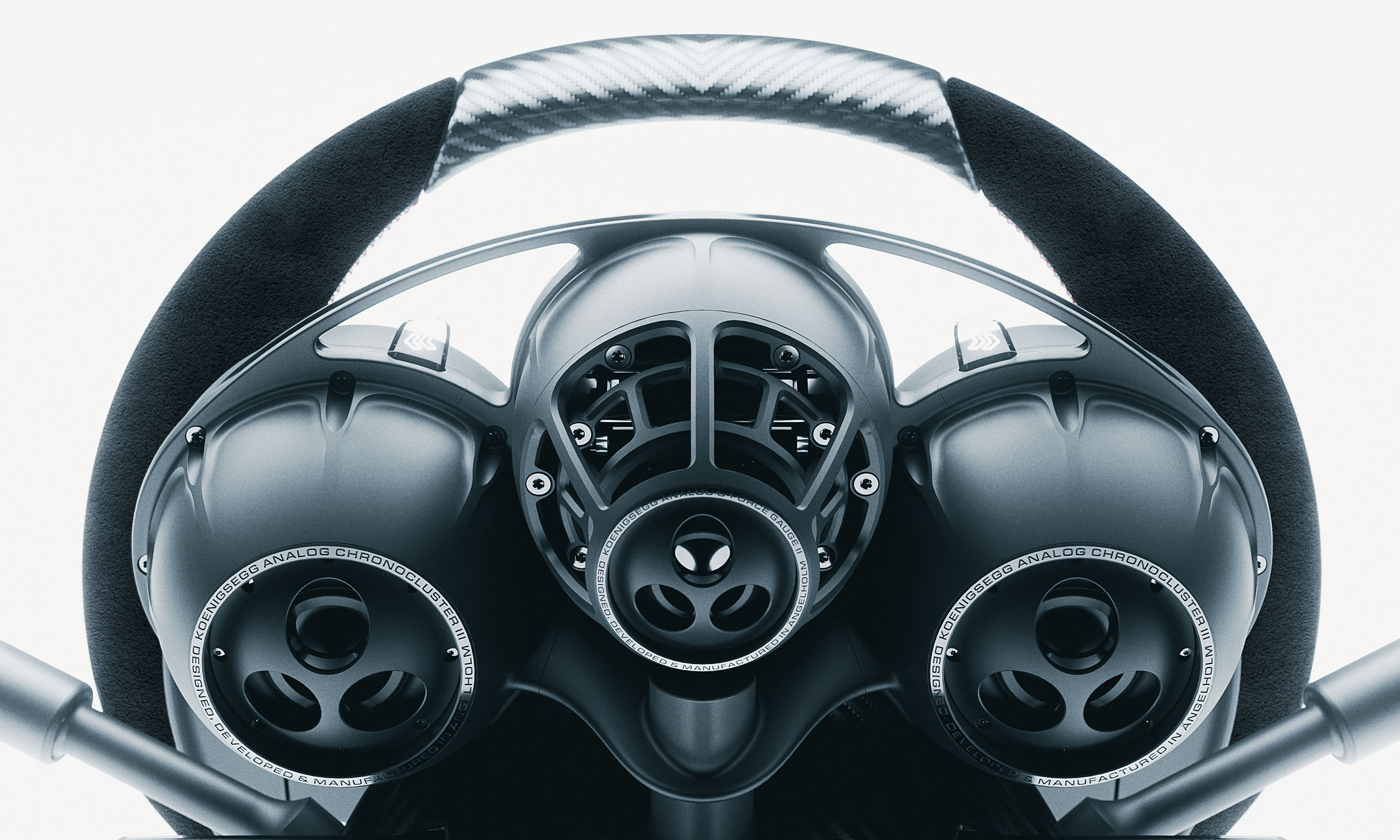
Inside, the cockpit greets the driver with a covered ignition switch, a toggle to prime the fuel pumps, and a red starter button. The third-generation Chronocluster puts the essentials in view with Koenigsegg’s analog G-meter at its center, a unit powered entirely by G-force with no electrical connection. Standard seats are ultra-light carbon fiber with a six-point harness for the driver, and the touchscreen infotainment system carries over.
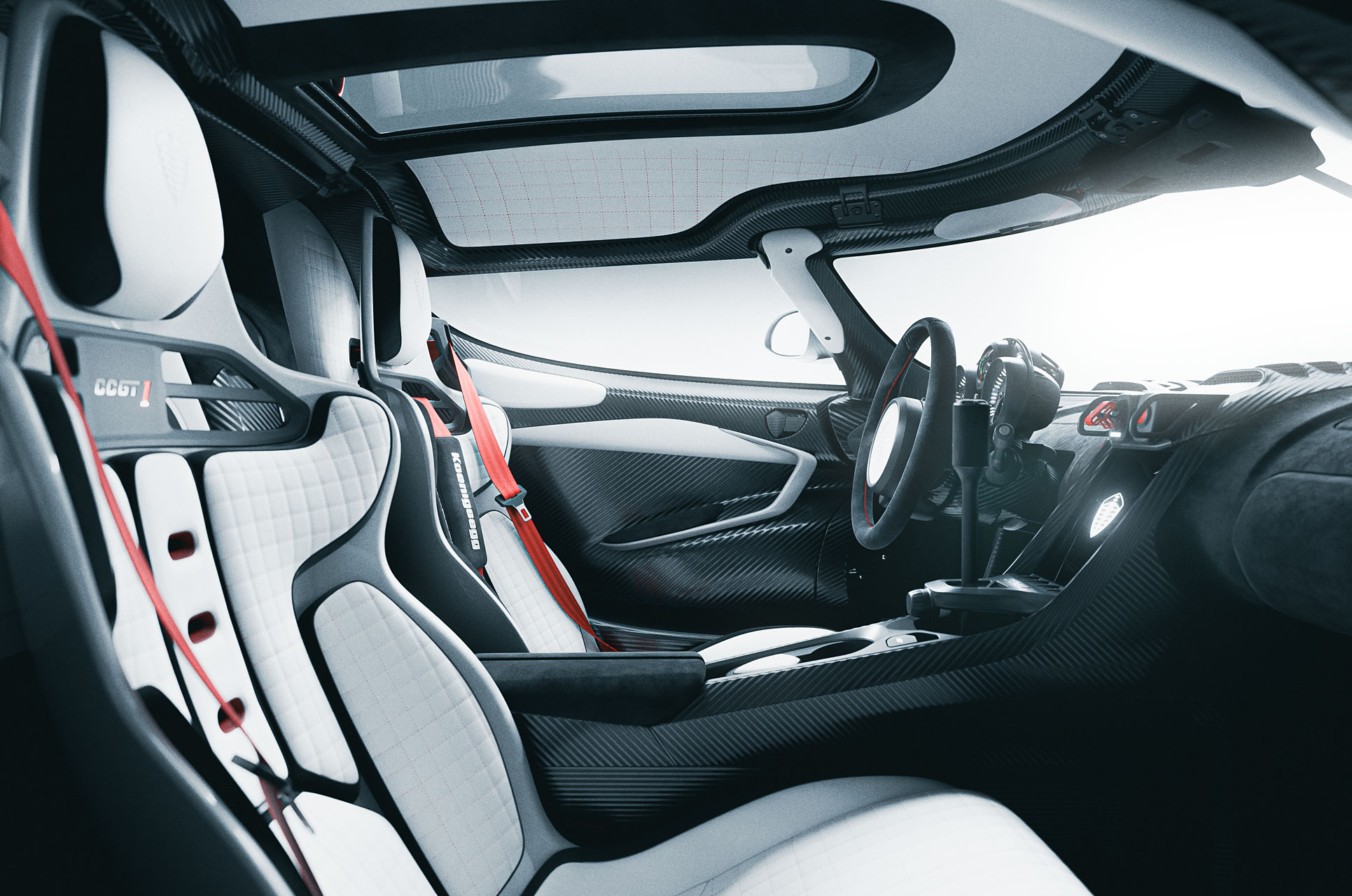
The optional track package, a first for Koenigsegg, can be installed and removed as needed by any Koenigsegg Certified Dealer. It includes a full carbon roll cage, HANS-compatible racing seats and six-point harnesses for both occupants, a race-grade fire suppression system, a race exhaust, integrated air jacks, track-focused suspension and brakes, a second set of rims with track-optimized tires, enhanced aerodynamics, and a full communications and telemetry system. Owners who specify it also receive invitations to exclusive CCGT1 track days with factory support. Koenigsegg says the package turns the CCGT1 into its fastest-lapping car to date.
GalleryPhotos by Koenigsegg