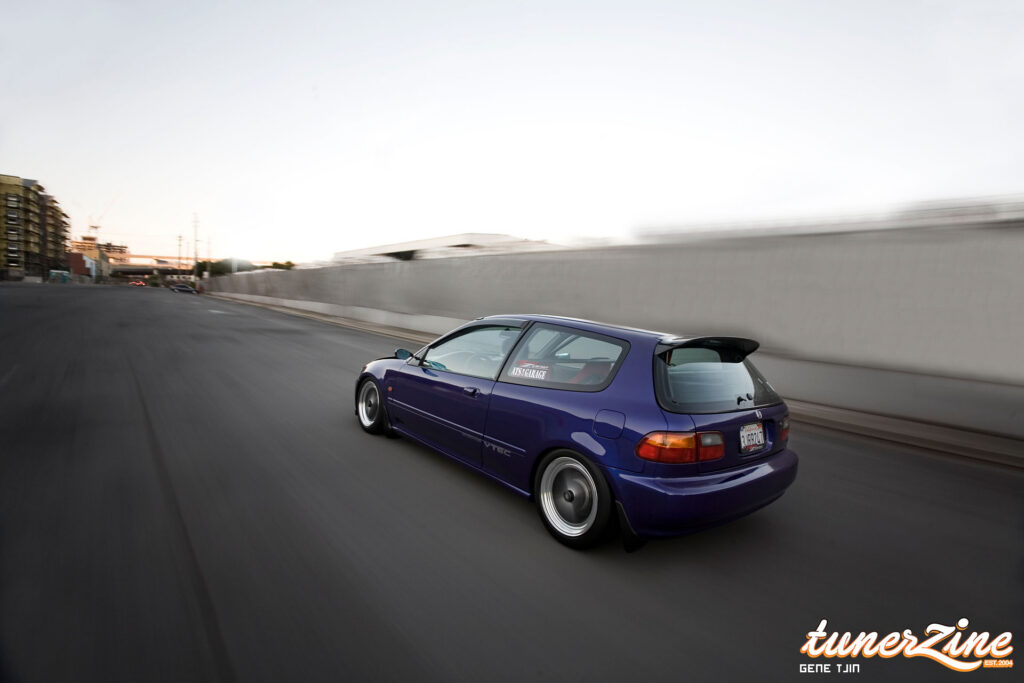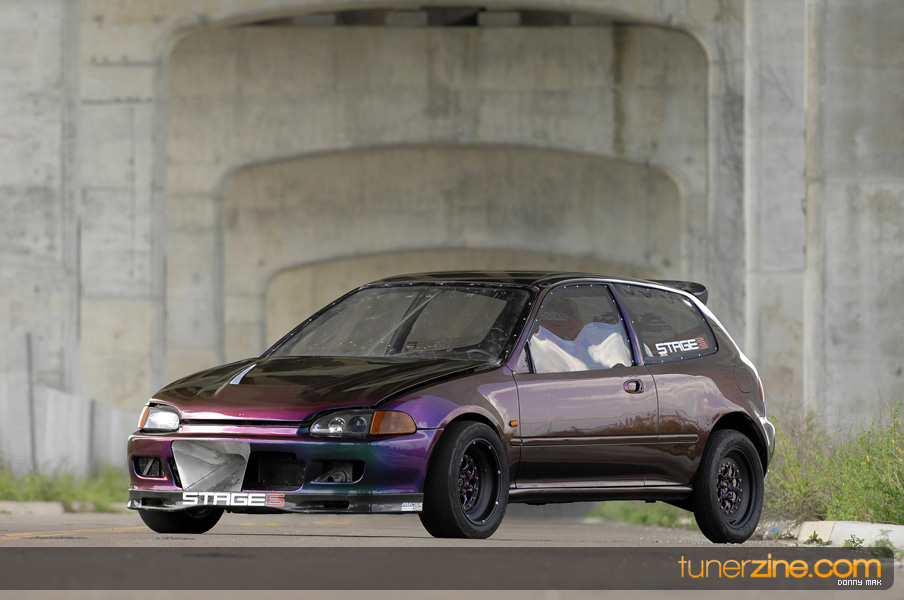
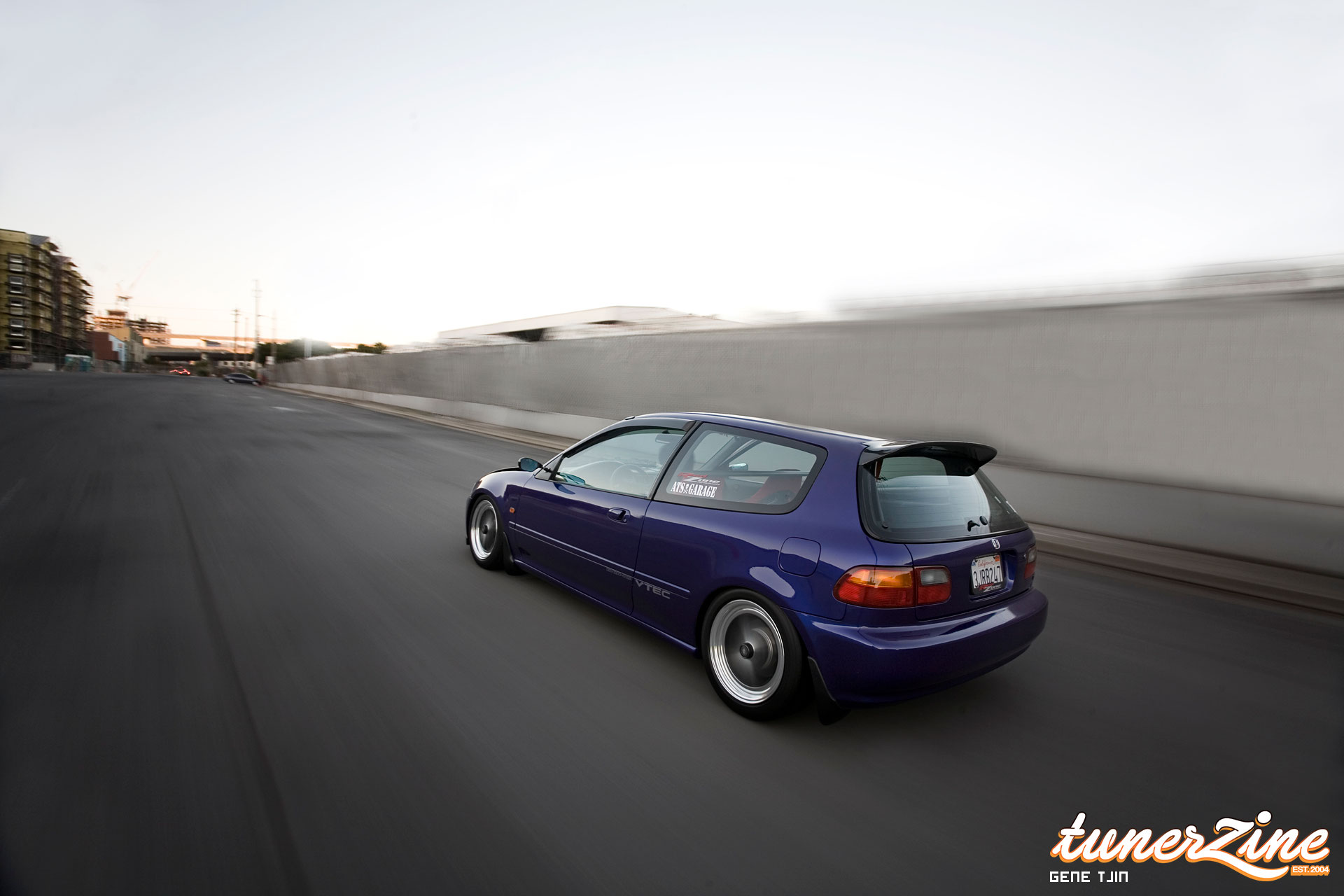
The March/April 2008 issue of HCI (Volume 9, Number 2) opened its feature on this Civic with a point the magazine clearly believed in: Northern California, and San Francisco in particular, was full of high-quality cars that never got the attention they deserved from the print magazines of the day. Ron Ibay’s Civic hatchback was one of the cars that proved it. Word came from ATS Garage front man Fred Chapman that Ibay’s build was finally ready to shoot, and after following the car’s progress over the previous months, the magazine’s crew flew into San Francisco to get it done.
Getting the car in front of a camera turned out to be the hard part of the whole trip. Weather kept eating into the schedule, and for a stretch it looked like the shoot wasn’t going to happen at all. Once schedules were rearranged and a window opened up downtown, everything came together in true ATS Garage fashion, with 10-plus team members making the trek to help out with the shoot.
The exterior is where the build’s theme shows most clearly, and that theme, in the original story’s words, was clean. Instead of chasing the attention-grabbing modifications common on Hondas of the era, Ibay leaned almost entirely on Japanese parts. A Spoon Sports carbon fiber duckbill spoiler and hood pair with Vision carbon fiber Type-DC mirrors, while JDM headlights, taillights, clear corner lenses, side marker lights, and a set of thin side moldings bring in the OEM flavor from the Japanese-market body. Honda Access window visors, OEM optional mudguards, and an OEM SiR front lip spoiler finish the list. The bodywork itself is Ibay’s own doing, straightened and prepped with help from his auto body class members and teacher before being covered in Super Sonic Blue Pearl, a color borrowed from the Acura Integra palette.
Under the hood sits a Japanese-spec B18C pulled from a 1994 Acura Integra GSR, and while most people would have been happy with what the naturally aspirated 1.8-liter makes in stock form, Ibay wasn’t interested in leaving it alone. Before the motor went in, he and his friends opened it up for a set of BLOX HSL camshafts, Peak cam gears, and a Supertech valvetrain, then added a Profab tri-header, a Skunk2 intake manifold, and a custom 2.5-inch exhaust. The fuel system was upgraded to match with a Walbro 255 pump and RC 310 injectors, with a P28 ECU keeping everything running smoothly. The goal, according to the original story, was a Civic with enough go to be genuinely enjoyable on Bay Area streets while staying reliable enough to drive all the time.
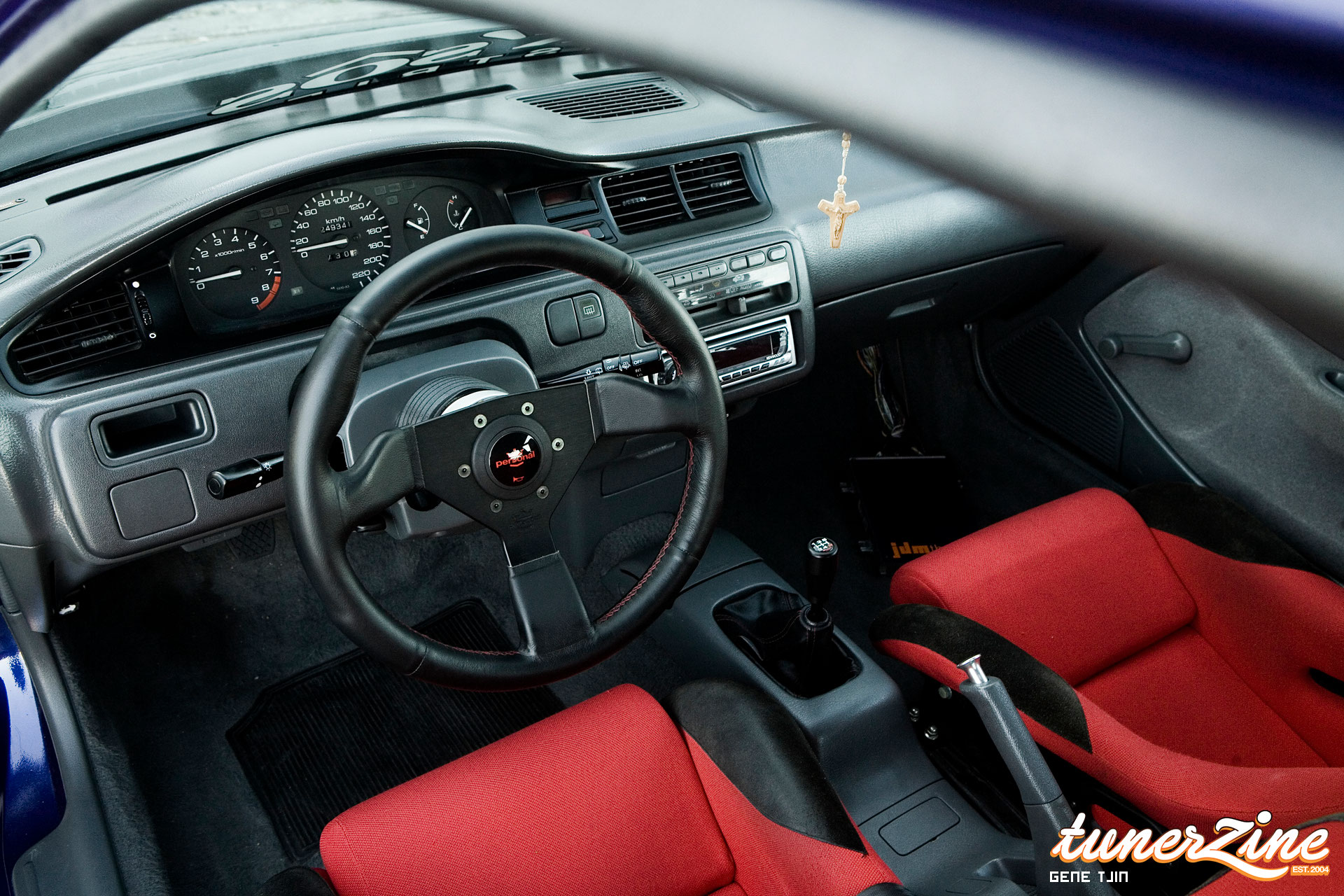
The interior follows the same restrained approach, mixing period-correct aftermarket staples with more JDM pieces pulled from the Japanese-market car. A pair of A-Sport bucket seats and a Sparco four-point harness handle seating duties, while a Personal Neo Grinta steering wheel sits on a MOMO hub adapter and NRG quick release combo. A Spoon Sports shift knob, an Integra Type R shift boot, and a Cusco emergency brake button round out the driver controls, and the JDM climate control section, clock, coin pocket, and gauge cluster complete the conversion.
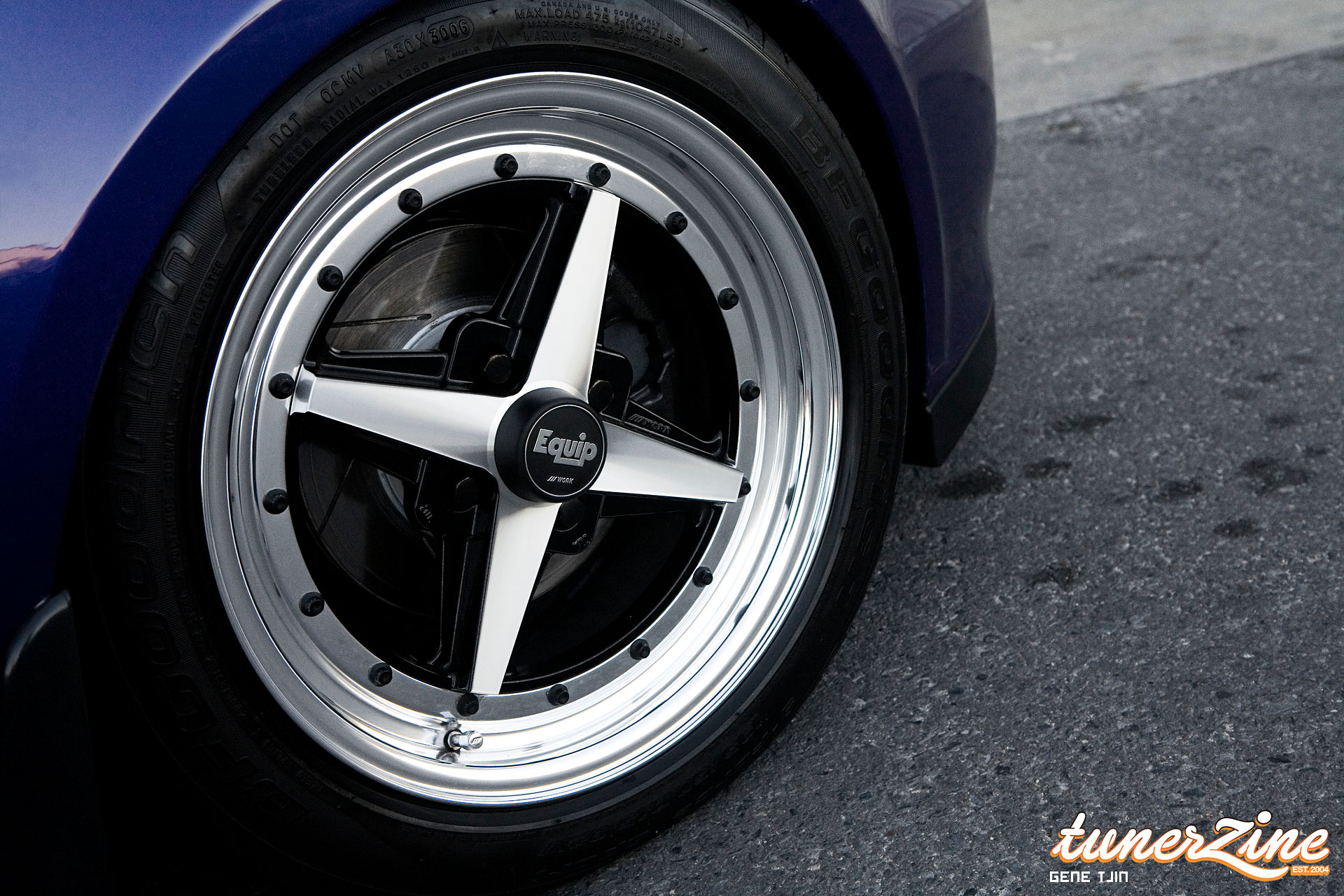
When it came time to sort the suspension and brakes, Ibay started by tossing the factory shocks and springs for Koni Yellows paired with Ground Control coilovers, then upgraded the lower control arms with SSR components and added an ASR rear subframe brace. Chassis bracing continues with a Carbing three-point strut tower bar, a Benen front X-member brace, a Carbing rear strut bar, and Benen B-pillar and C-pillar bars. The factory rear drums were swapped for the disc setup from an Acura Integra GSR fitted with Powerslot rotors, and the whole package rolls on 15×7 +38 Work Equip 01s wrapped in 195/50R15 BFGoodrich rubber.
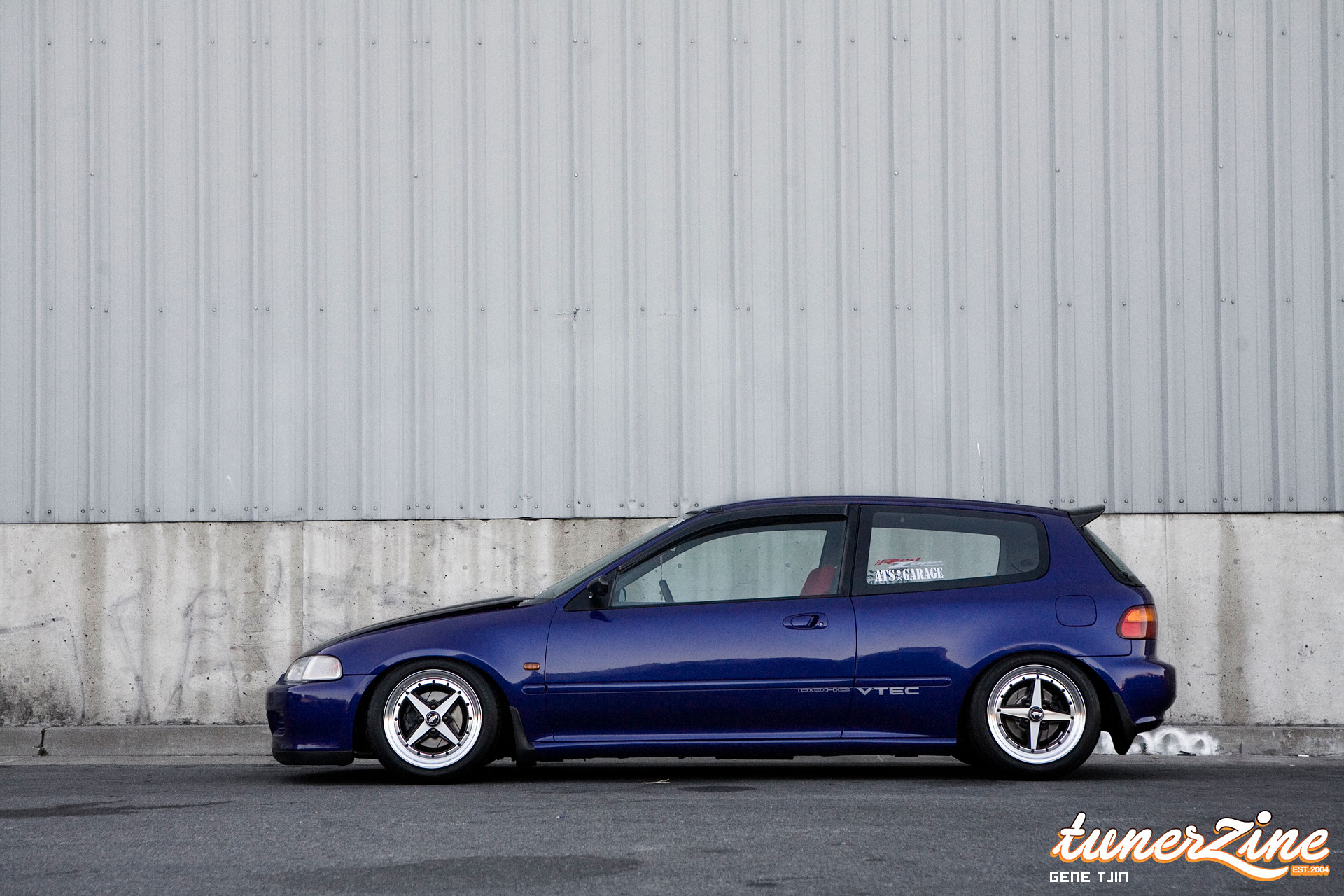
The original feature closed by pointing out that Ibay and the rest of the ATS Garage crew had a habit of switching out parts quickly, and that the car had probably already changed by the time the issue reached readers. That was the nature of builds like this one, and it’s part of why these shoots are worth preserving: they catch a car at one specific moment that was never going to last.
GalleryPhotos by Gene Tjin