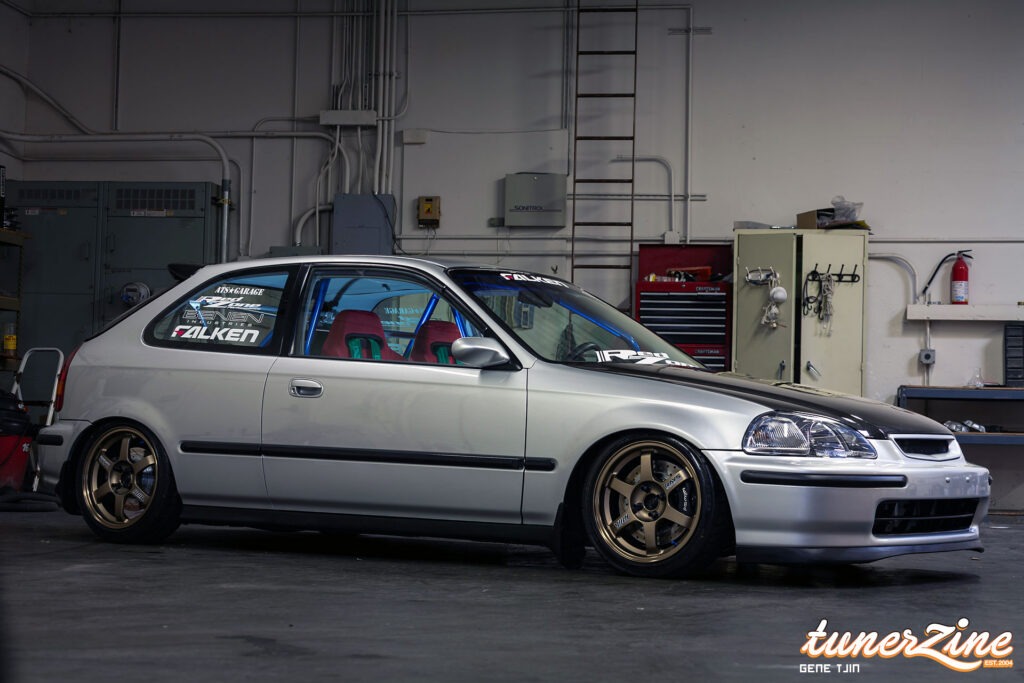
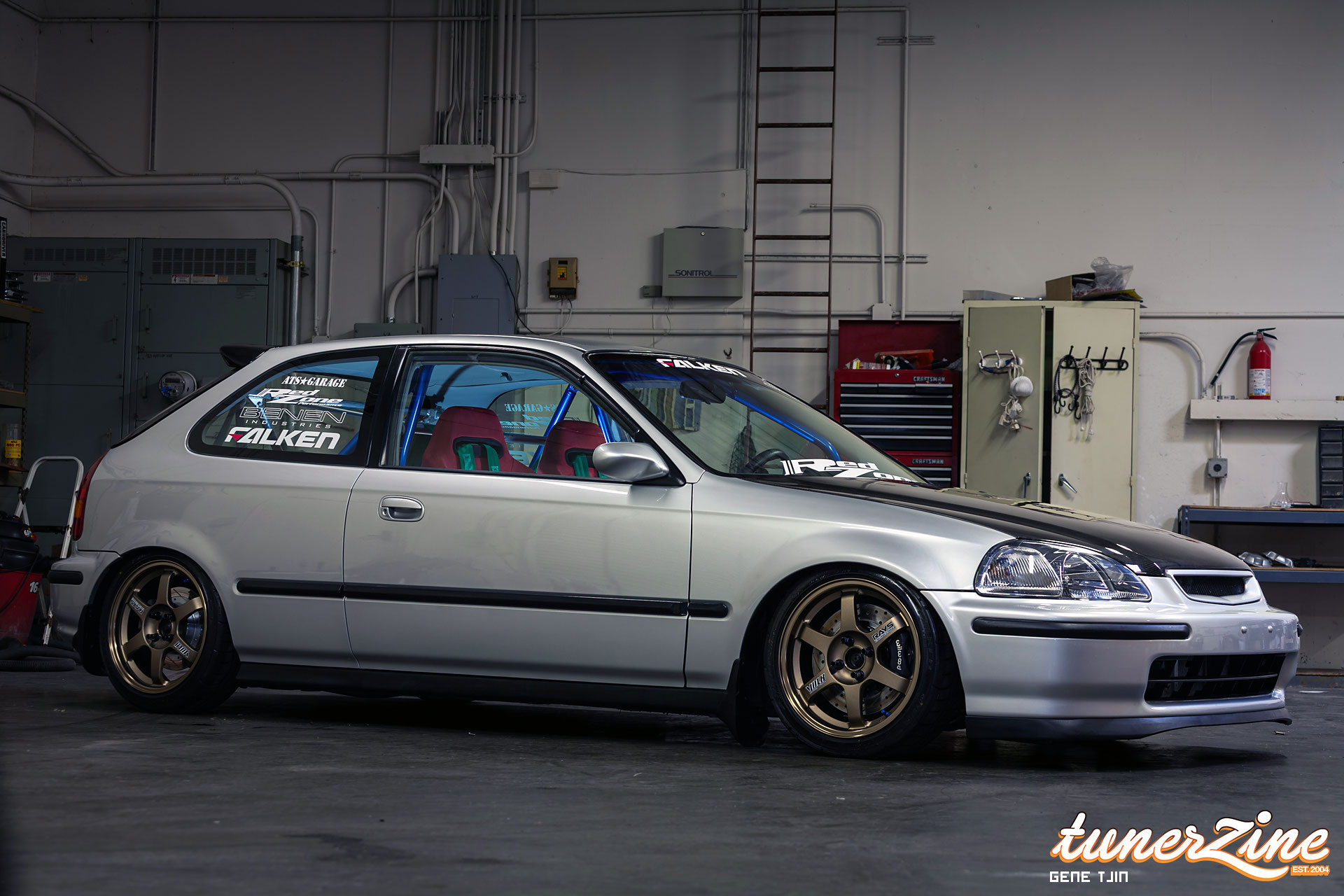
The September 2006 issue of HCI kicked off its feature on this Civic with an argument about Northern California, making the case that Bay Area builders set themselves apart from the rest of the country much like the region’s music and slang. Neema Tabrizi’s Civic was HCI’s example. Tabrizi, from San Mateo, had been into cars since before he was old enough to drive, and the 1998 Honda Civic hatchback (EK) he picked up as a weekend project had grown into a full ATS Garage build by the time Gene Tjin photographed it for the story.
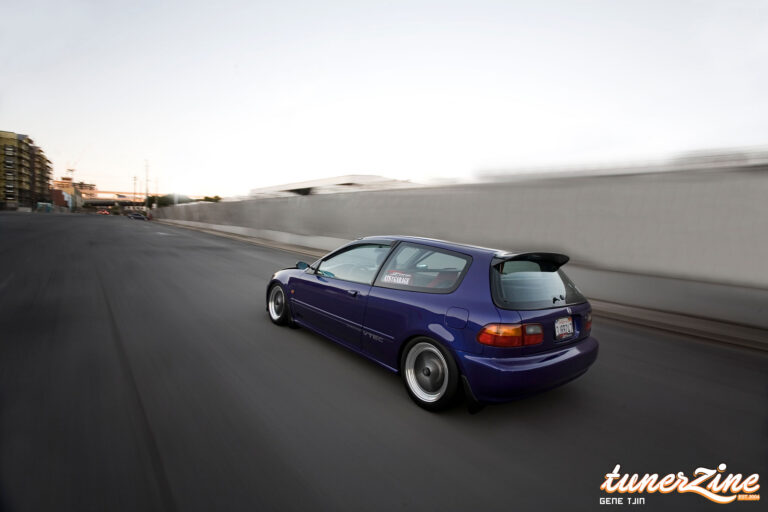
It’s the second ATS Garage Civic from Tjin’s HCI shoots we’re preserving here, following Ron Ibay’s Civic EG, which ran in the magazine about a year and a half later. The original story also had some fun with the crew’s name, noting that ATS had been explained a lot of different ways over the years. For this feature, HCI went with “attention to specifics.”
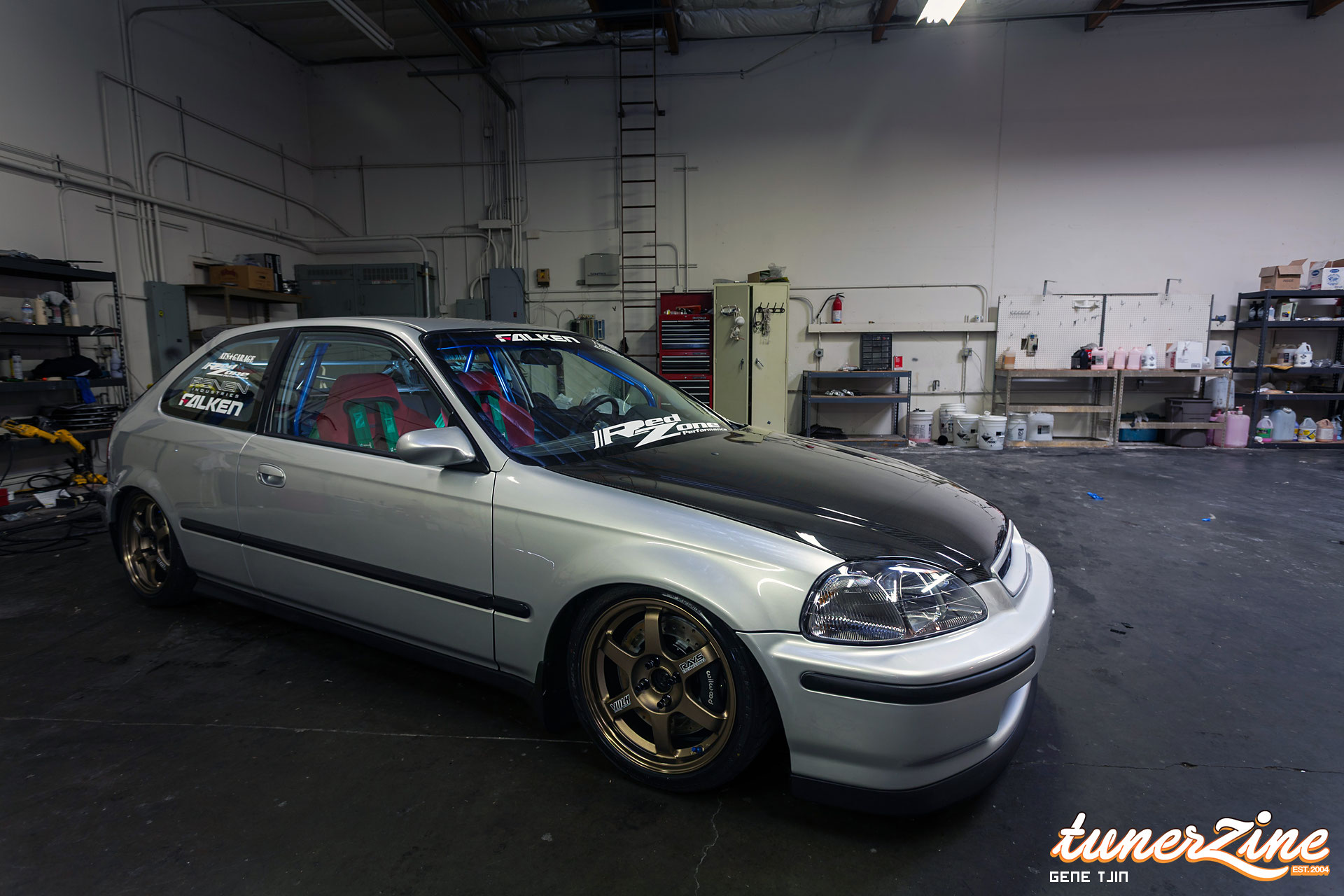
Most of the exterior changes are easy to miss unless you know what a stock EK looks like. The stock bumpers were replaced with JDM SiR bumpers and a matching SiR front lip, while Type-R headlights and a Type-R grille continued the Japanese-market theme. Seibon supplied the carbon fiber hatch and hood, FAL provided a Lexan rear window, and a RoBear Racing carbon fiber duckbill spoiler finished the rear.
A set of Spoon Sports mirrors, optional Honda mudguards, and an antenna block-off plate were the kinds of details most people would walk right past, and those were exactly the pieces HCI focused on. The magazine described the exterior as looking nearly stock to the untrained eye while being heavily modified to anyone familiar with Hondas. That approach carried through the rest of the build.
A lot more changed under the hood. After deciding the stock SOHC engine had to go, Tabrizi spent what HCI described as countless hours researching his options before settling on a JDM K20A and six-speed transmission. The car then went to Jeremy, Brandon, and Wayne at RedZone Performance in Fremont, a shop that at the time handled everything from rollcages to right-hand-drive conversions.
The swap was installed using Hasport K1 mounts with 80-grade urethane bushings. Fuel is delivered by a Walbro 225 pump through a TWM fuel rail to a set of RC 440cc injectors, while RedZone fabricated the custom stainless steel race header, test pipe, turndown exhaust, and K20 axles for the EK chassis. A set of TWM 52mm individual throttle bodies with carbon fiber velocity stacks handles induction, and a C&R Racing DC5 aluminum radiator with a slim fan and Samco hose kit handles cooling.
Tabrizi also wanted the engine bay to be as clean as possible, which meant considerably more fabrication work for RedZone. The crew built a custom wiring harness, mounted custom battery terminals on the firewall, and ran steel braided fuel and clutch lines with custom AN fittings to reduce the clutter. The engine wiring, fuse box, brake lines, and a Yamaha R6 battery were all relocated, leaving the K20 sitting almost by itself in the bay.
RedZone’s final job was dyno-tuning the Hondata K-Pro. On the Dynojet, the Civic put down 236 hp and 174 lb-ft of torque. For a car that looked relatively understated from the outside, there was a lot more going on beneath the surface.
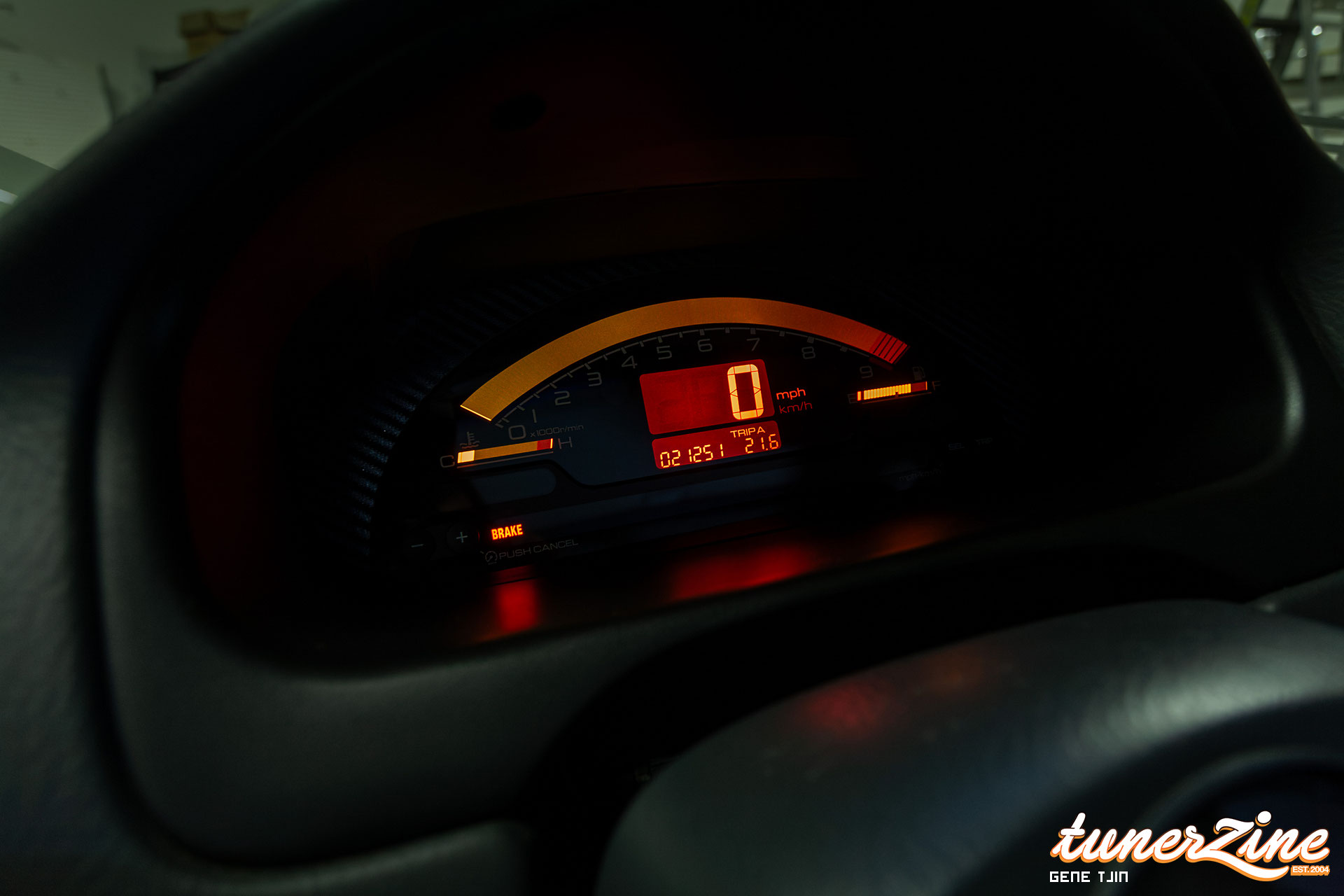
Inside, RedZone fabricated a plug-and-play harness so an S2000 gauge cluster could be installed in a custom carbon fiber bezel. A second RedZone carbon bezel holds three Defi gauges for oil pressure, exhaust gas temperature, and water temperature, and the shop also installed an electronic one-touch hood release. A MOMO Monte Carlo steering wheel sits on a Splash Motorsports hub with an NRG quick release, while Tabrizi added an NRG steering wheel lock and cover to make the car a less appealing target.
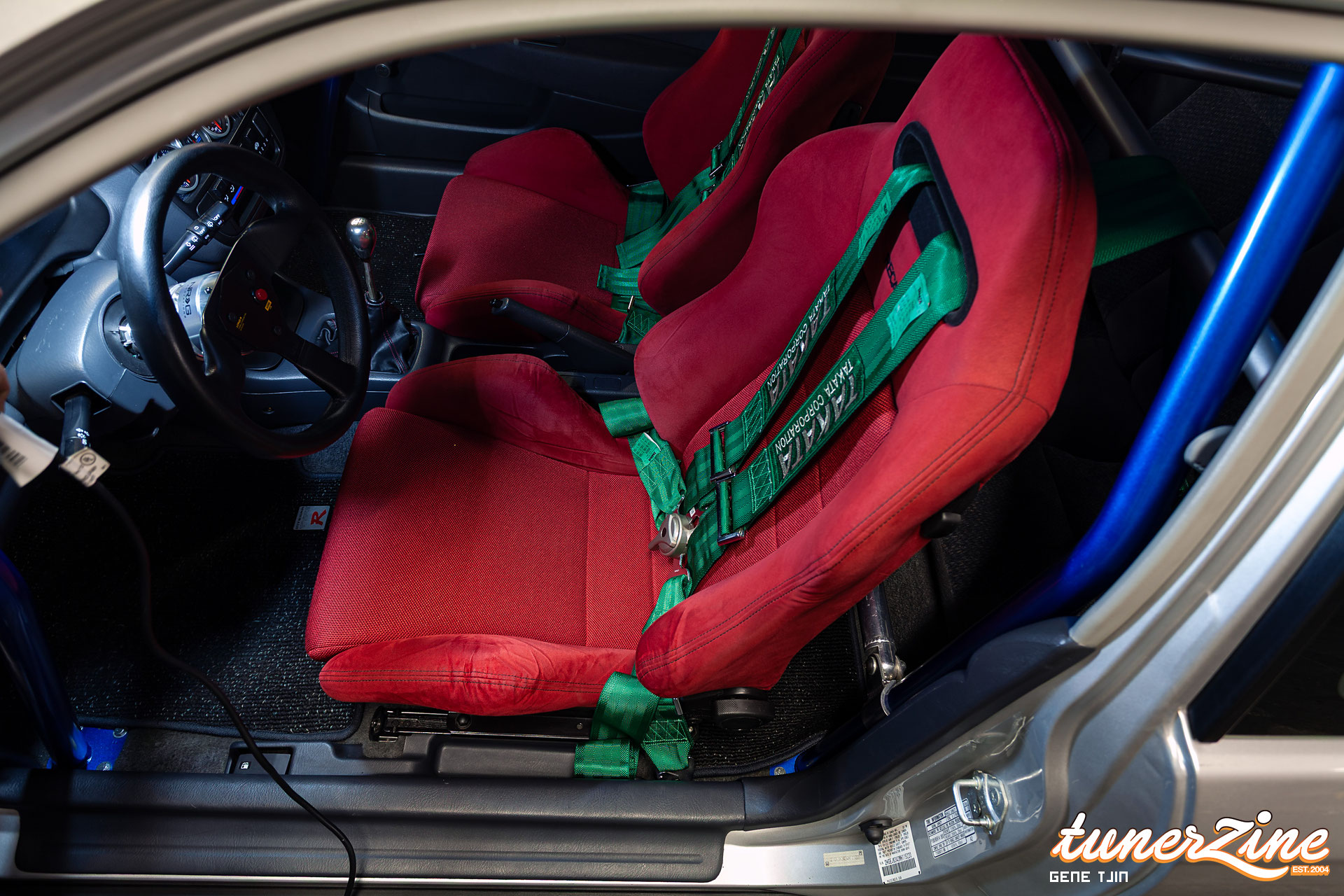
A pair of JDM Civic Type-R suede Recaro seats and Takata 340R harnesses hold the driver and passenger in place. An Alpine 7898 iPod-ready head unit with Alpine speakers handles the music. HCI also made a point of mentioning that Tabrizi had been spotted around town playing “hyphy” music through the system, which says plenty about where and when this car was built.
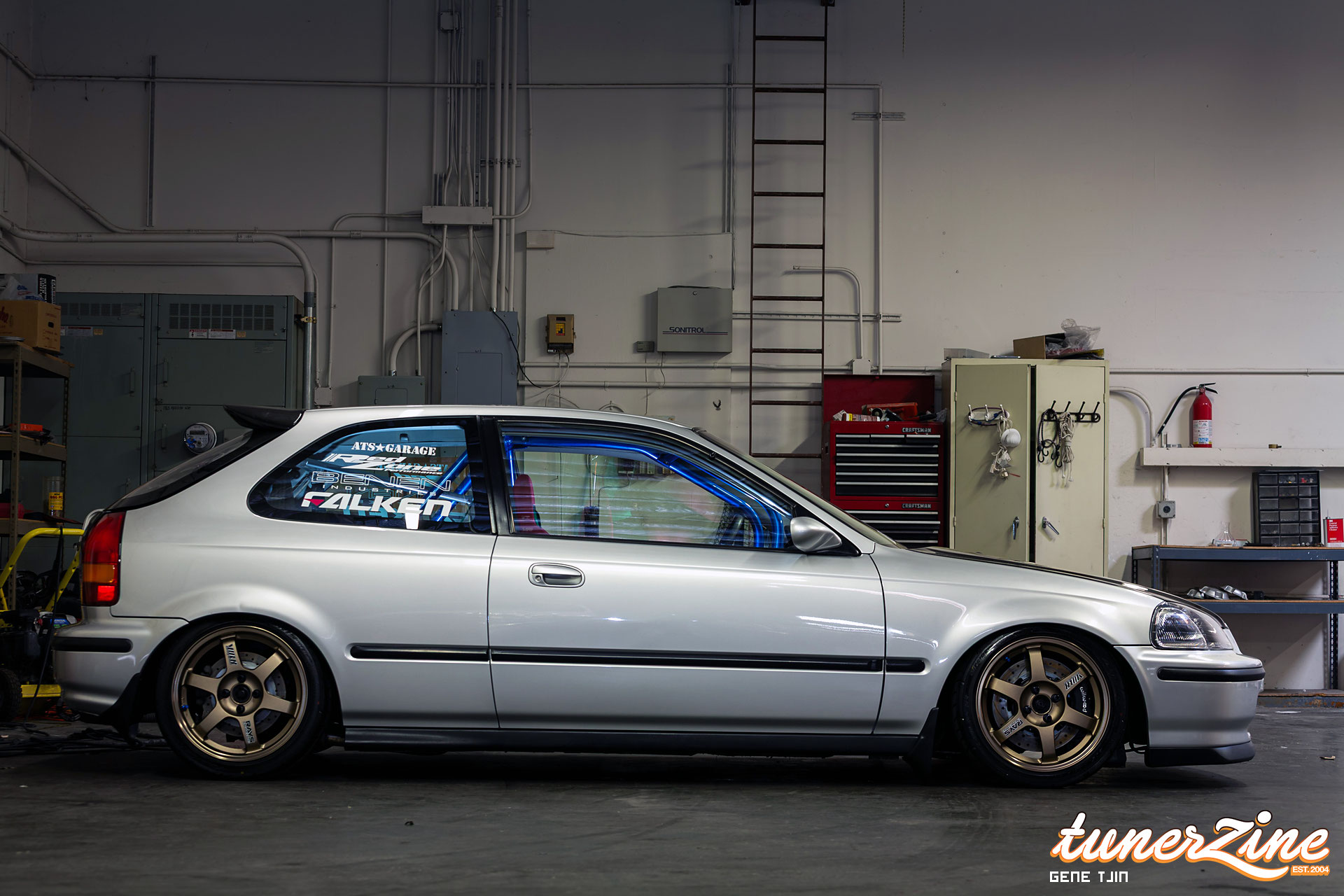
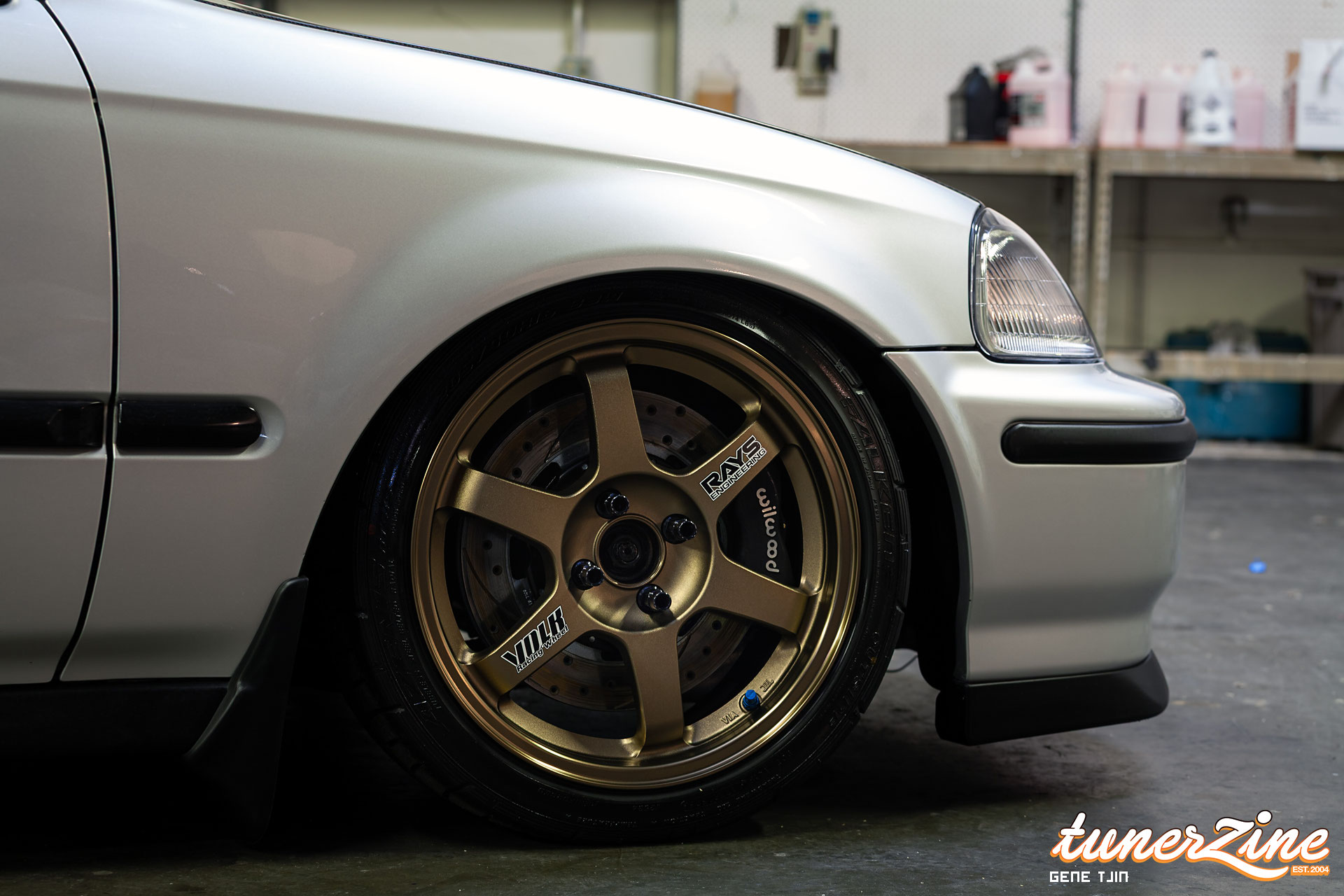
The stance was one of the first things HCI’s crew noticed when they saw the car. The original story described it as slammed to the ground on a set of A’PEXi N1 Pro-type coilovers, with bronze 16×7 Volk Racing TE37s wrapped in Falken Azenis tucked deep into the fenders. A Cusco six-point rollcage and add-on bar handle some of the chassis stiffening, while several of the other pieces came through Tabrizi’s friendship with Ken and Dom Montes of Benen Industries.
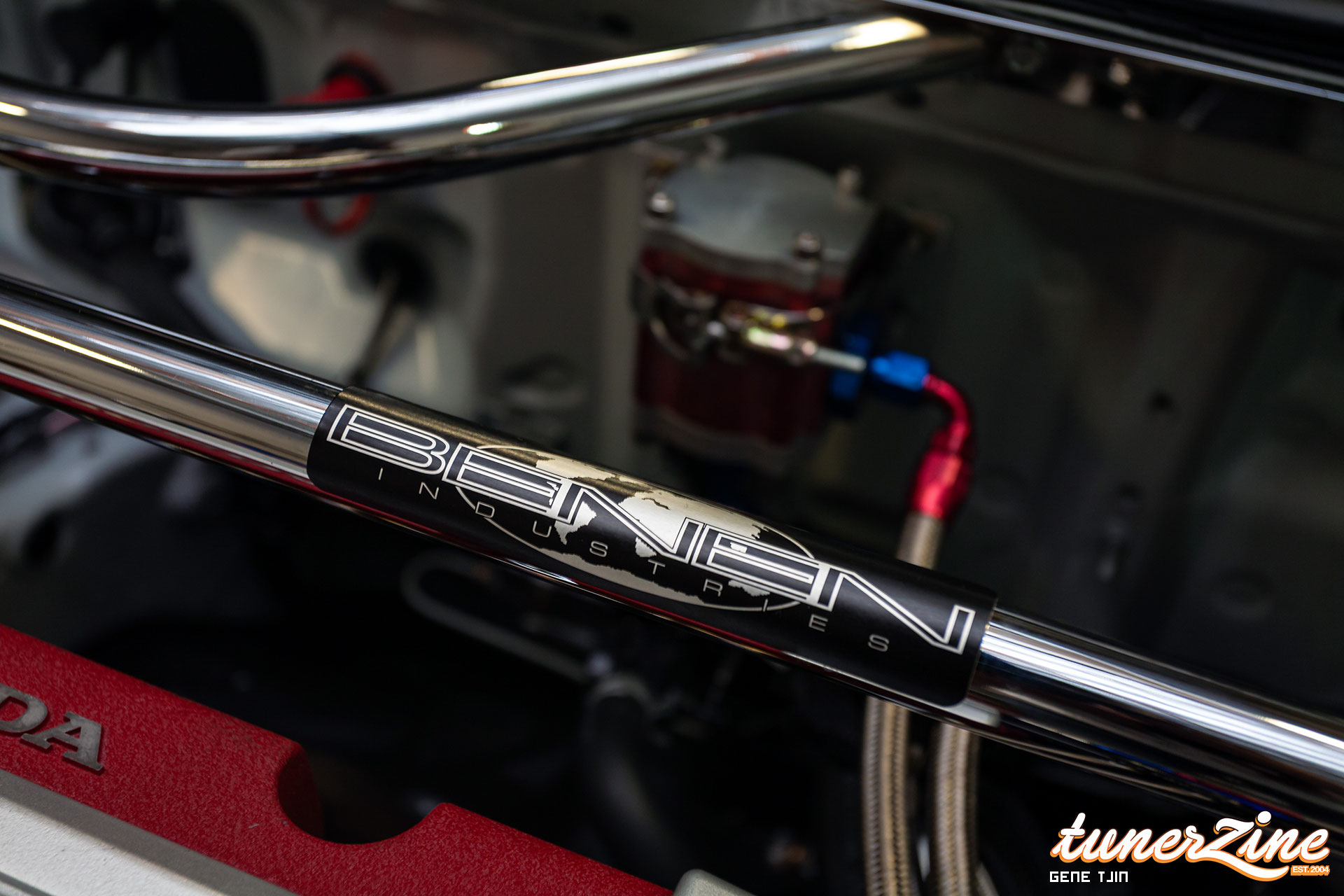
Benen contributed a front upper tripod brace and a rear lower tie bar before Ken Montes fabricated a one-off Benen V-brace and X-brace for the hatch area. Up front, Wilwood handles braking with steel braided lines, a big brake kit with four-piston calipers, race pads, and 12.2-inch rotors. The rear uses Fastbrakes 11-inch rotors with Wilwood pads.
The original story closed by crediting Tabrizi’s family and the ATS Garage crew for helping turn what started as a beater into the car on these pages. Its final line was that “attention to specifics pays off,” which was a fitting way to describe a build filled with parts and details that could easily go unnoticed. Nearly 20 years later, those details also make the Civic a great snapshot of Northern California’s Honda scene at the time.
GalleryPhotos by Gene Tjin