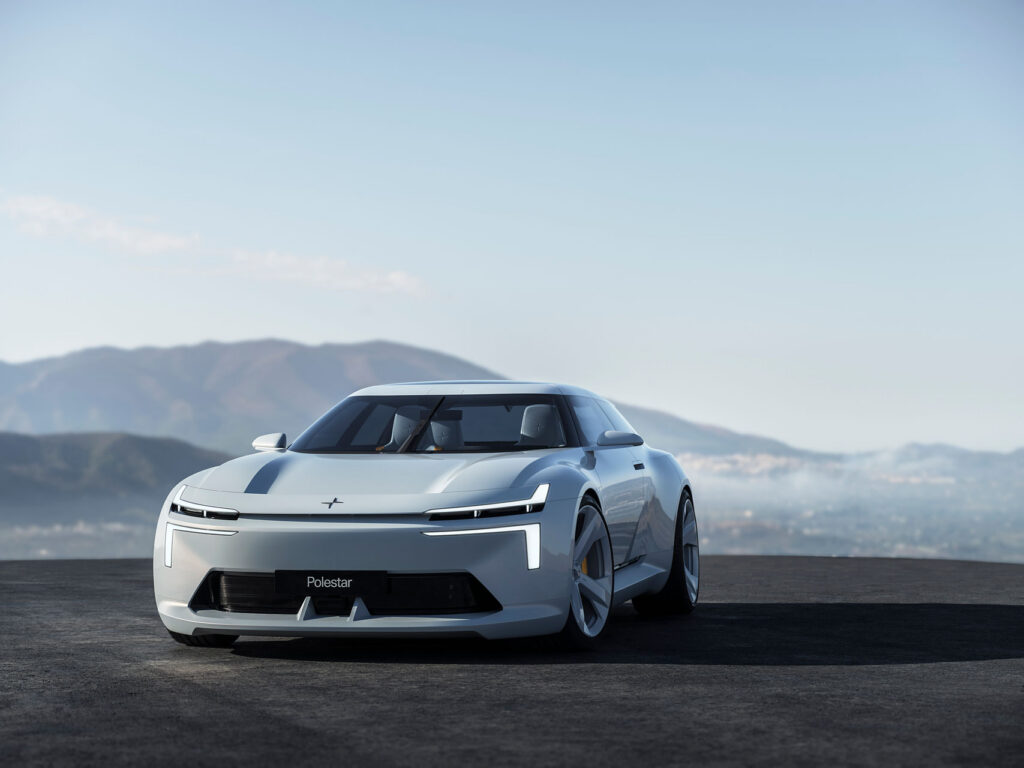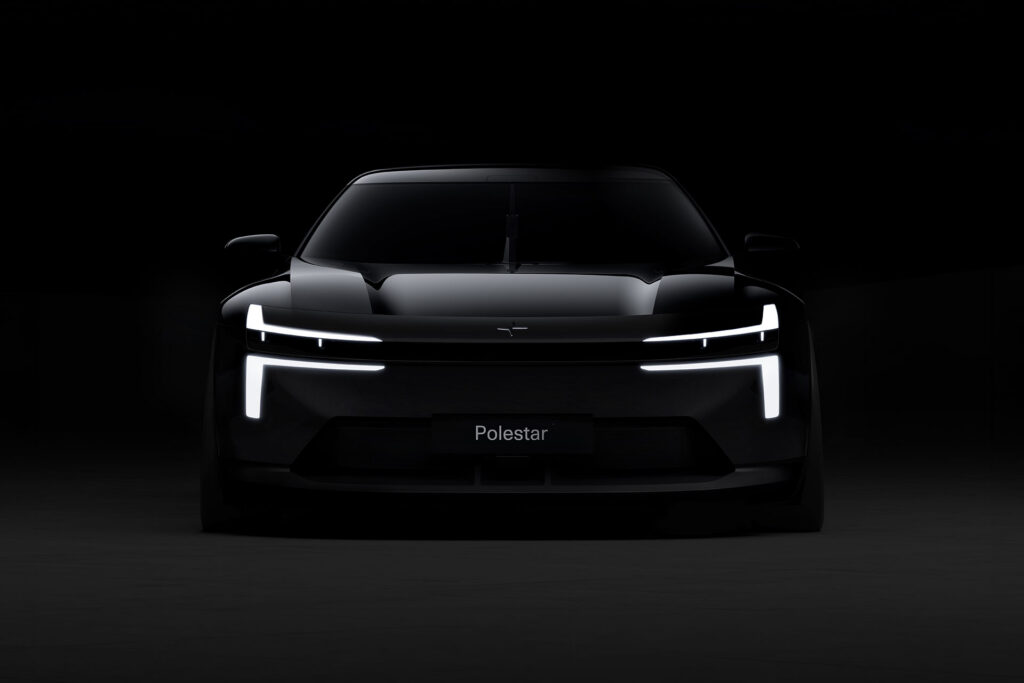
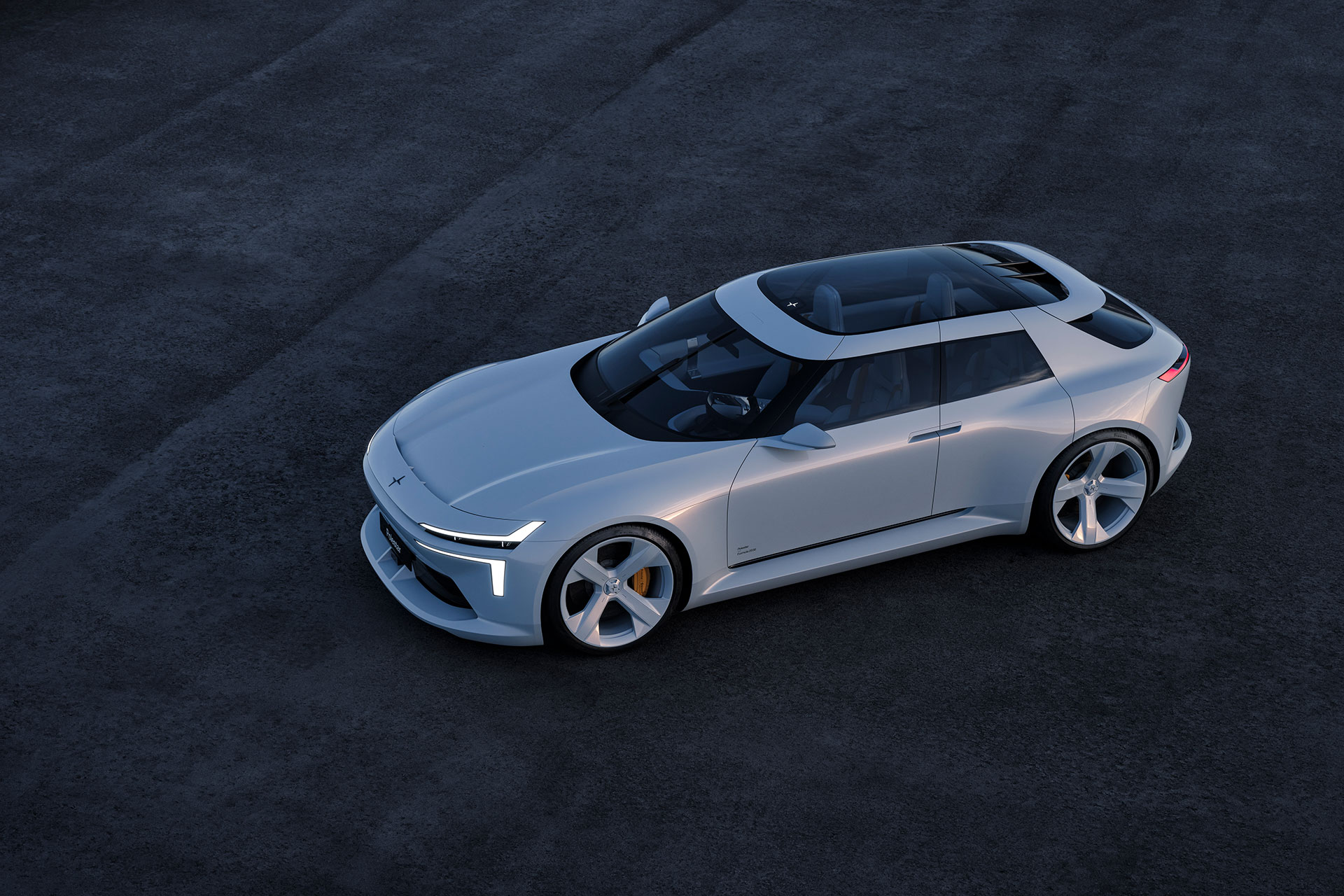
Polestar has revealed the Formula 2030 concept, the show car it confirmed in September as a preview of its next design direction and the first concept created under Head of Design Philipp Römers. The car is the physical version of the company’s Formula 2030 business strategy, and Polestar says several of its design elements will carry over to the next-generation Polestar 2, due in 2027, and the Polestar 7 that follows in 2028. It made its debut during the international media drive for the Polestar 4 SUV.
Neither of those upcoming models is expected to be sold in the U.S. Polestar was denied authorization under the Commerce Department’s Connected Vehicle Rule in June, preventing it from selling 2027 model year and newer vehicles in the country. Existing earlier-model inventory can still be sold, and current owners continue to receive service, warranty, and support.
The Formula 2030 is a compact four-door sports car measuring 184.3 inches (4,680 mm) long, 79.6 inches (2,021 mm) wide, and 53.1 inches (1,350 mm) tall on a 109.4-inch (2,780 mm) wheelbase. That makes it lower than the Polestar 5, with Polestar positioning it between the next Polestar 2 and the Polestar 7 in size.
Its profile uses a cab-rearward stance, long hood, short overhangs, and 22-inch center-lock wheels. Dual Blade headlights are integrated into a front aero element and preview the face of the next Polestar 2, while a shark nose and deep front splitter are tied together by a central spine. That spine continues into a single vertically mounted windshield wiper on the visor-style wraparound windshield. A LiDAR unit is concealed beneath an aerodynamic shroud when not in use, with the Polestar star projected into the panoramic glass roof behind it.
At the rear, the full-width lightbar is gone in favor of Single Blade taillights that Polestar says will reach series production. The rear glass wraps into shallow side glazing interrupted by the C-pillar, while the rear wing mounts centrally on illuminated supports and a diffuser finishes the lower body.
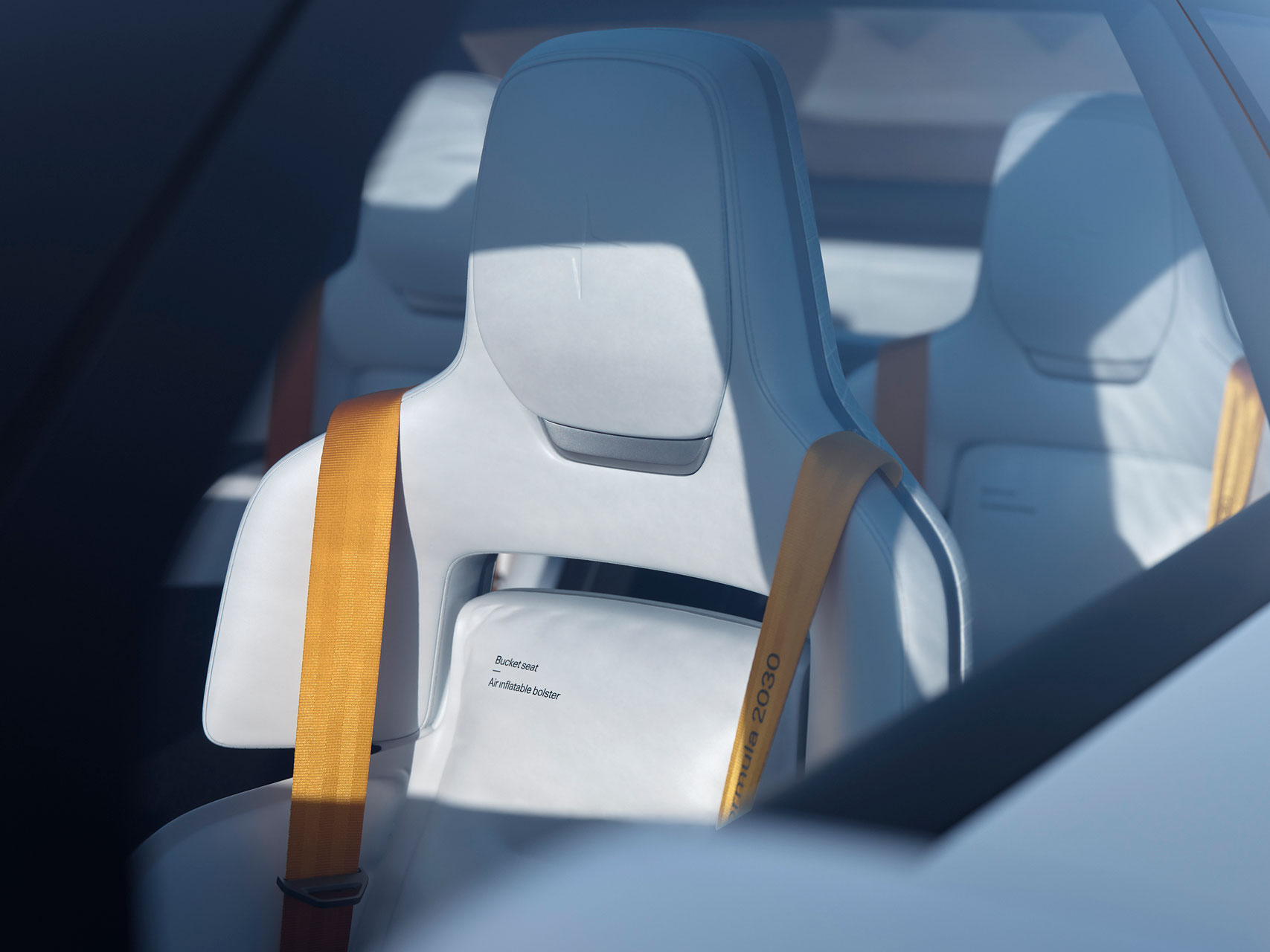
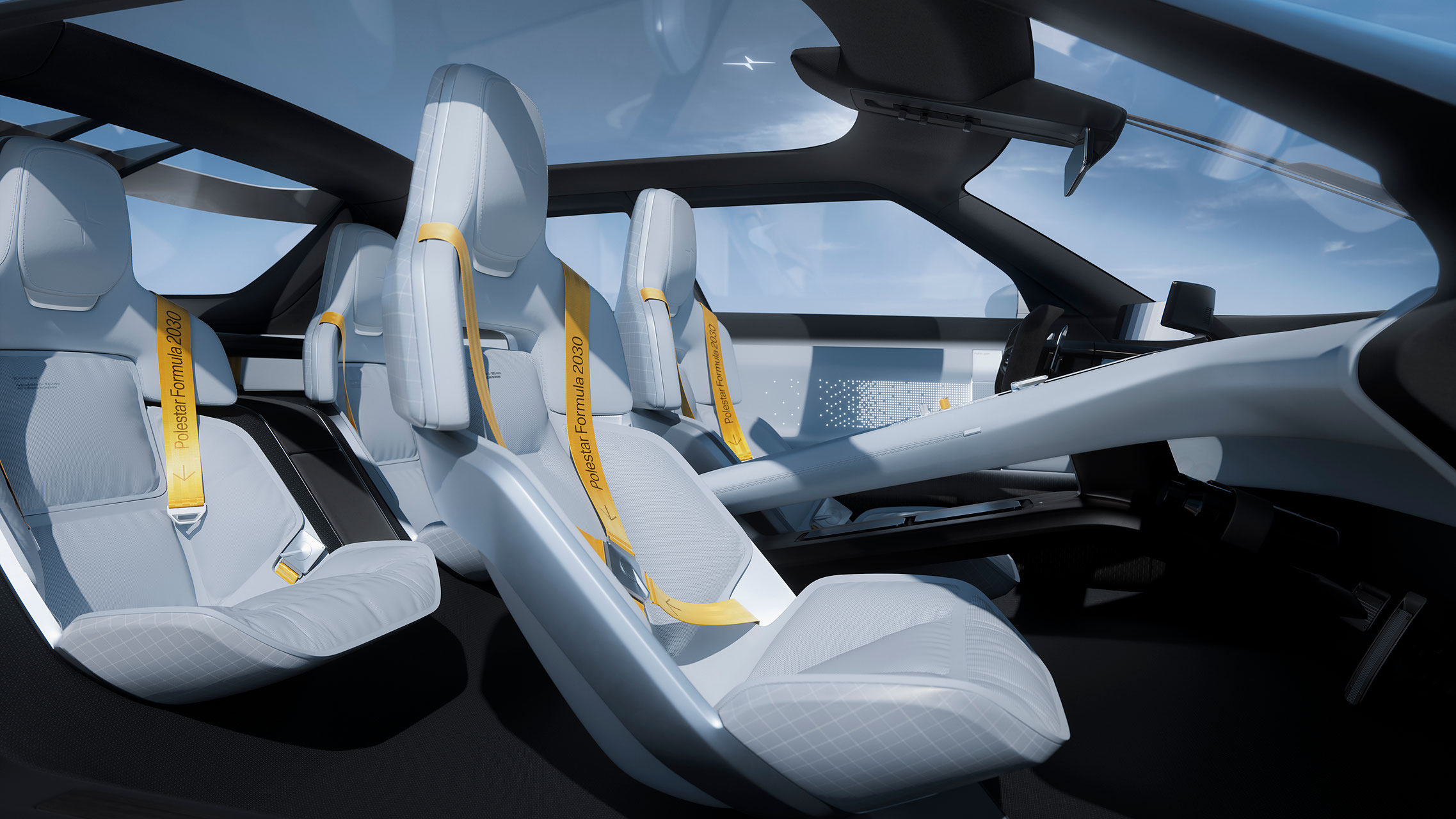
The concept debuts a color called Nitrogen, which Polestar says changes character with natural light. The body, wheels, side cladding, splitter, and diffuser use a mix of gloss, matte, and satin finishes in the same tone. Swedish Gold, the brand’s familiar performance accent, appears on the Brembo brake calipers, valve caps, seat belts, and interior details.
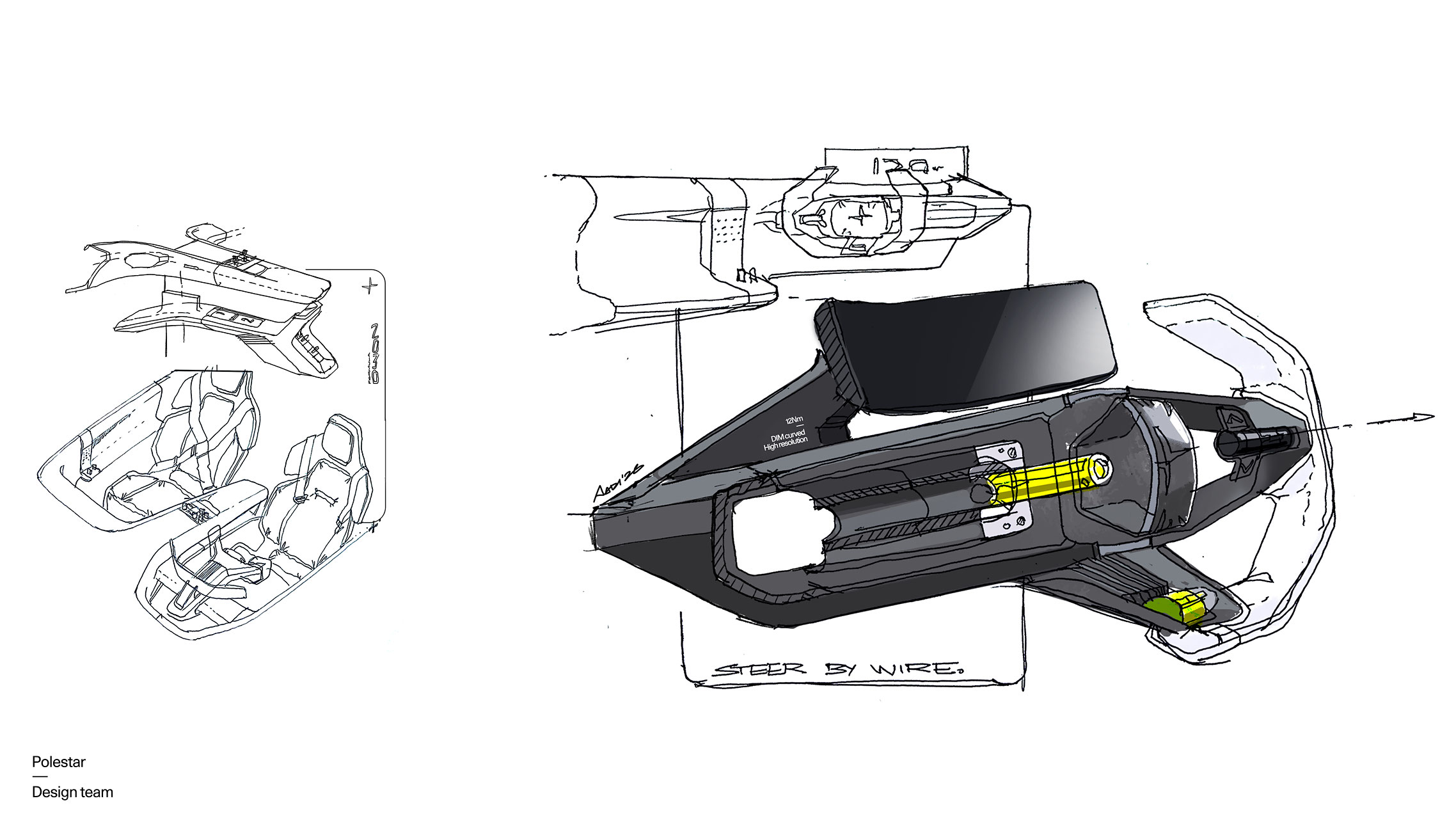
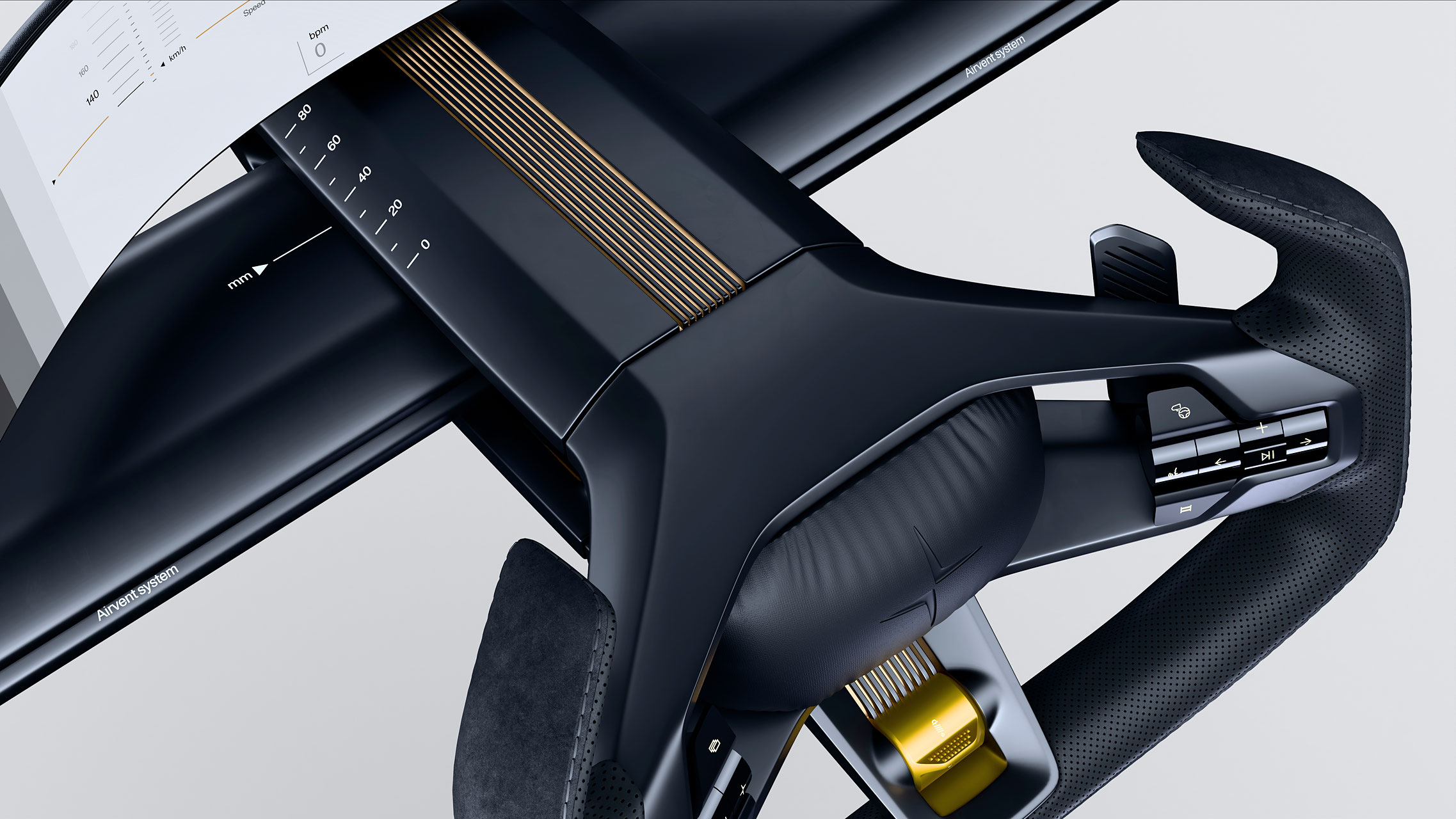
Inside, a curved 20-inch HyperDIM driver display mounts directly to the steering column, while a 12.2-inch center screen sits in the rising center tunnel. A horizontal interior band with indirect lighting wraps around the driver and continues through the cabin. Four individual low-mounted seats use inflatable bolsters and cushions, and access comes through rear-hinged doors with no B-pillar.
A selector in the center console switches between Performance, Normal, and Autonomous modes, with the seating position, steering wheel, displays, and steering feel changing to suit each setting. In Autonomous mode, the center screen stays upright while the seat and steering wheel move farther apart. In Performance mode, the center screen drops flush into the console while the steering wheel and HyperDIM move toward the driver.
Below the center screen are eight physical controls that can be configured as rocker switches or rotary dials and assigned to different functions. Google Gemini is integrated through Google built-in, continuing the system Polestar already uses in its production cars.
The materials program continues Polestar’s mono-material approach. The door interiors use materials from the same polymer family to make closed-loop recycling easier, while the exposed seat frame and cross-car beam use low-emission galvanized steel made with recycled material and renewable energy. The seat backs use a bio-based composite made from European flax and bio-based polypropylene in a grid weave.
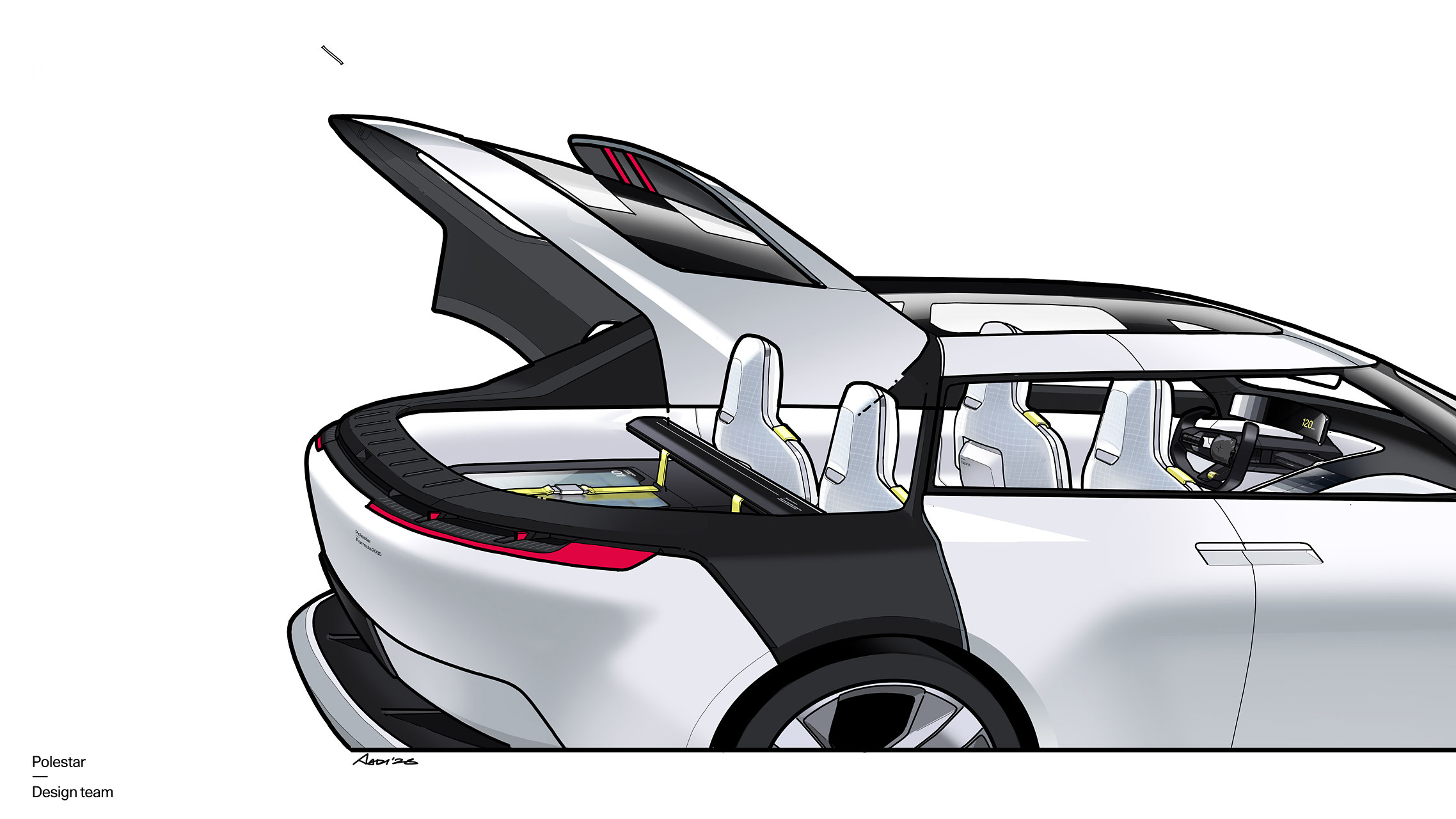
Opening the rear clamshell exposes Bcomp natural fiber composite body structure, the car’s Öhlins dampers, and a transparent trunk floor with Polestar bags secured by Swedish Gold luggage straps. The front compartment is sized for race helmets and a fire extinguisher and is framed by a Swedish Gold strut brace.
Polestar released no powertrain, output, battery, or range figures for the Formula 2030. The concept itself is not confirmed for production, but its design language will begin showing up on the company’s next generation of cars starting with the new Polestar 2 in 2027.
GalleryPhotos by Polestar