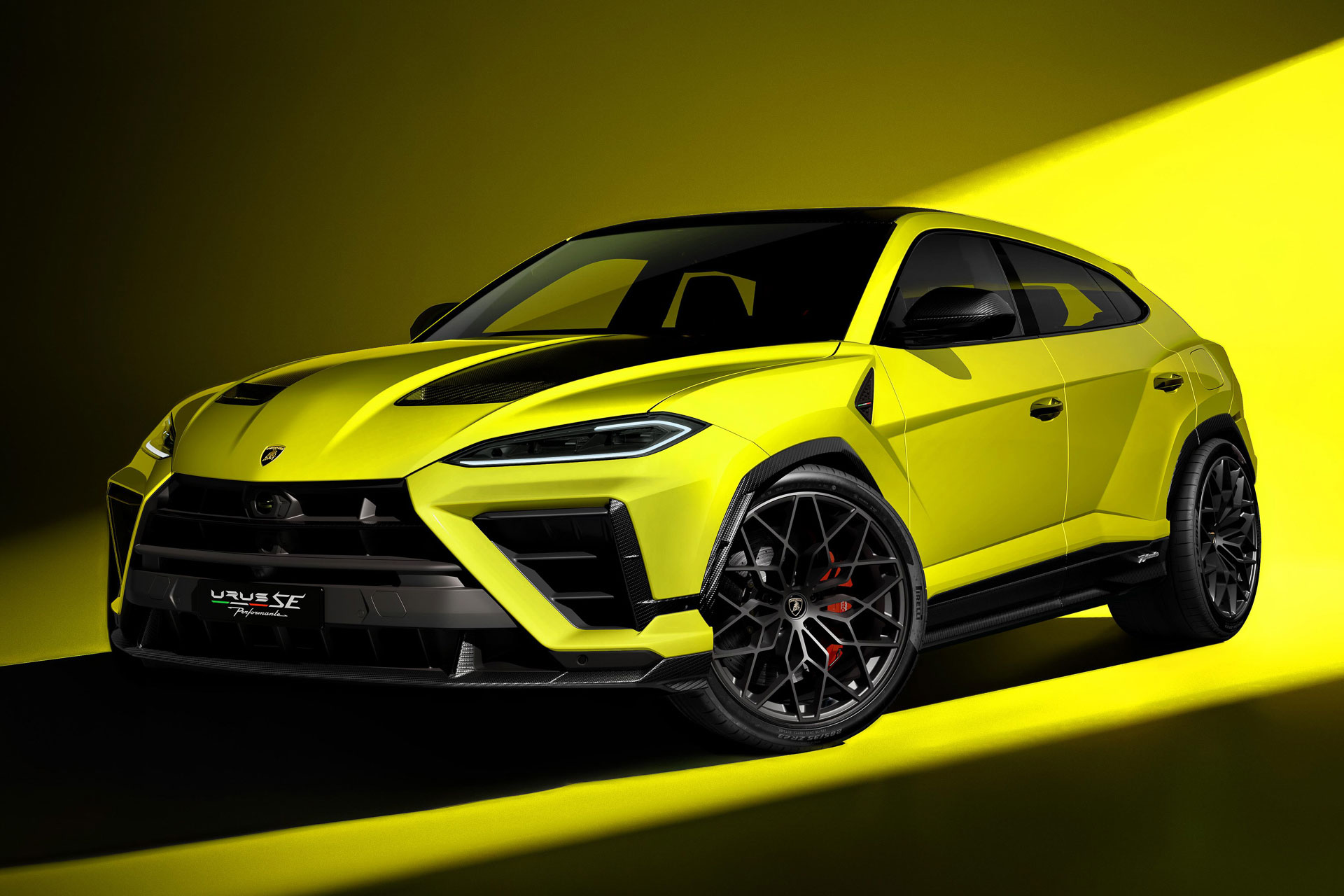
Lamborghini has revealed the Urus SE Performante, the new high-performance version of its plug-in hybrid Super SUV and the most powerful Urus the company has built. The car pairs a 4.0-liter twin-turbo V8 with a permanent-magnet electric motor for a combined 801 hp (812 CV) and up to 738 lb-ft (1,000 Nm) of torque, an increase of 144 hp and 111 lb-ft over the previous Urus Performante. Lamborghini quotes 0 to 62 mph (100 km/h) in 3.3 seconds, 0 to 124 mph (200 km/h) in 10.8 seconds and a top speed of 194 mph (312 km/h).
Powertrain and weight
The electric motor sits ahead of the eight-speed automatic gearbox and works both as a boost to the V8 and as the source for full-electric running of more than 37 miles (60 km), drawing on a 25.9 kWh lithium-ion battery mounted beneath the load floor. Peak output arrives at 6,000 rpm, with maximum torque available from 2,000 to 5,500 rpm. Drive goes to all four wheels through an electronically controlled central clutch working with an electronically controlled self-locking rear differential, and the transmission has been recalibrated through a software update that Lamborghini says reduces response times.
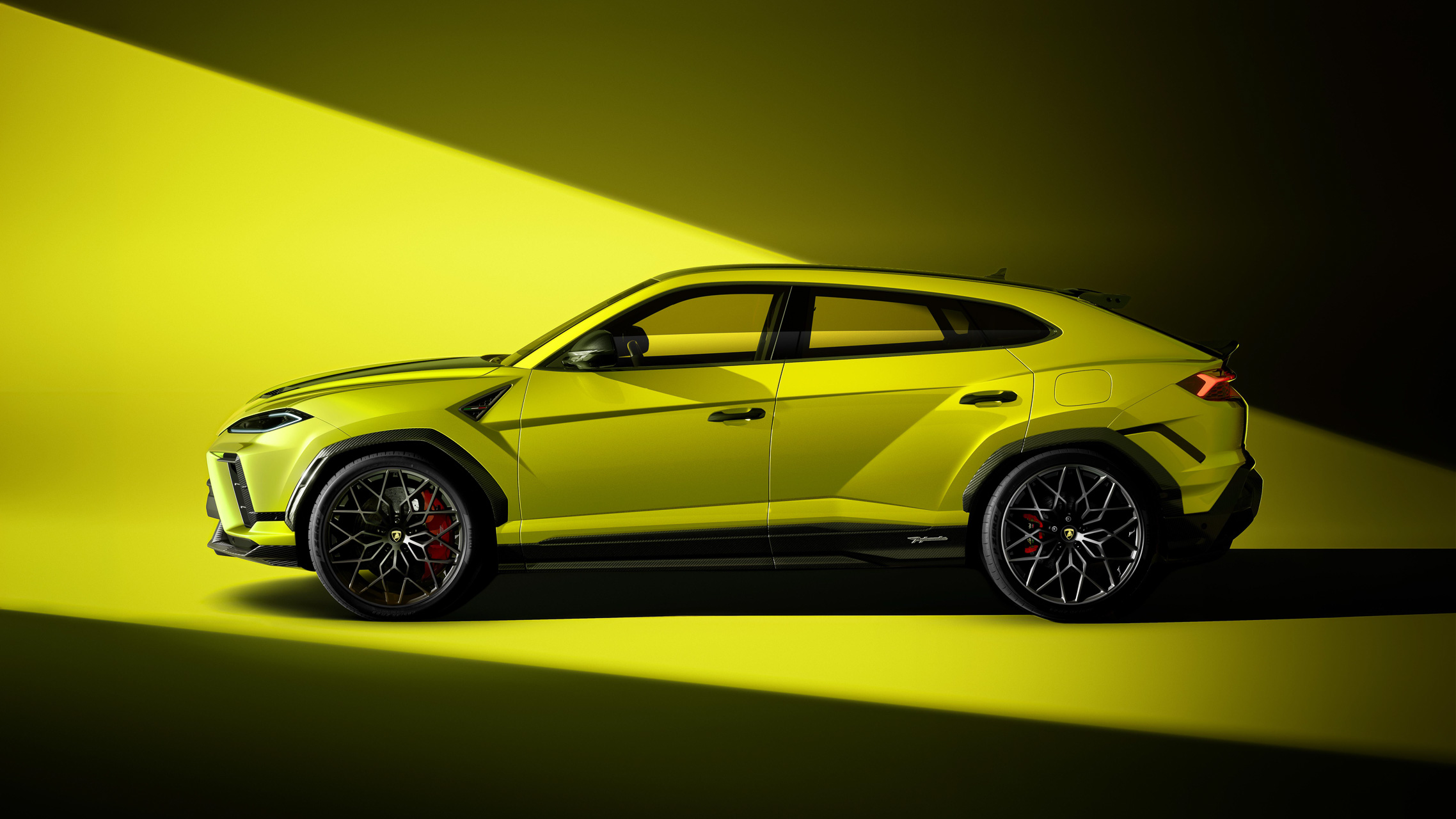
Compared with the Urus SE, the Performante is 70 lb (32 kg) lighter, with a homologated curb weight of 5,452 lb (2,473 kg) and a weight-to-power ratio Lamborghini quotes at 3 kg per CV. The savings come from extensive carbon fiber in the hood, roof, wheel arches, side skirts and rear diffuser, a standard titanium exhaust that saves more than 22 lb (10 kg), the Integrated Power Brake system at roughly 9 lb (4 kg), NVH optimization and the standard CorsaTex by Dinamica interior trim.
Chassis, suspension and dynamics
The Urus SE Performante introduces the AURA dual-chamber air suspension to the range, a setup Lamborghini refers to as 2K2V for its two air chambers and two valves. It varies spring stiffness and adjusts damping independently for compression and rebound, and the company says it cuts roll gradient in fast driving by 55 percent while reducing comfort-related vibrations by 25 percent against the previous Urus Performante. Track width grows by 0.6 inch (16 mm).
The car also adopts the six-degrees-of-freedom 6D sensor first seen on the one-off Fenomeno shown at Monterey Car Week in 2025, mounted near the center of gravity to measure acceleration on three axes plus pitch, roll and yaw. That data feeds the Integrated Power Brake unit, which Lamborghini says raises braking power by 10 percent and system responsiveness by 12 percent over the Urus Performante and brings 124 mph (200 km/h) to a stop in under 427 feet (130 meters). Eight accelerometers, one at each wheel and one at each corner of the chassis, support the predictive traction and stability control.
A new Rally mode joins Strada, Sport and Corsa, along with a full EV mode calibrated for city use that allows more than 37 miles of electric range and a top speed above 81 mph (130 km/h). The Tamburo selector combines those modes with the Electric Performance Strategies carried over from the Urus SE, including Hybrid, Recharge, which tops the battery up to 80 percent, and Performance.
Design and interior
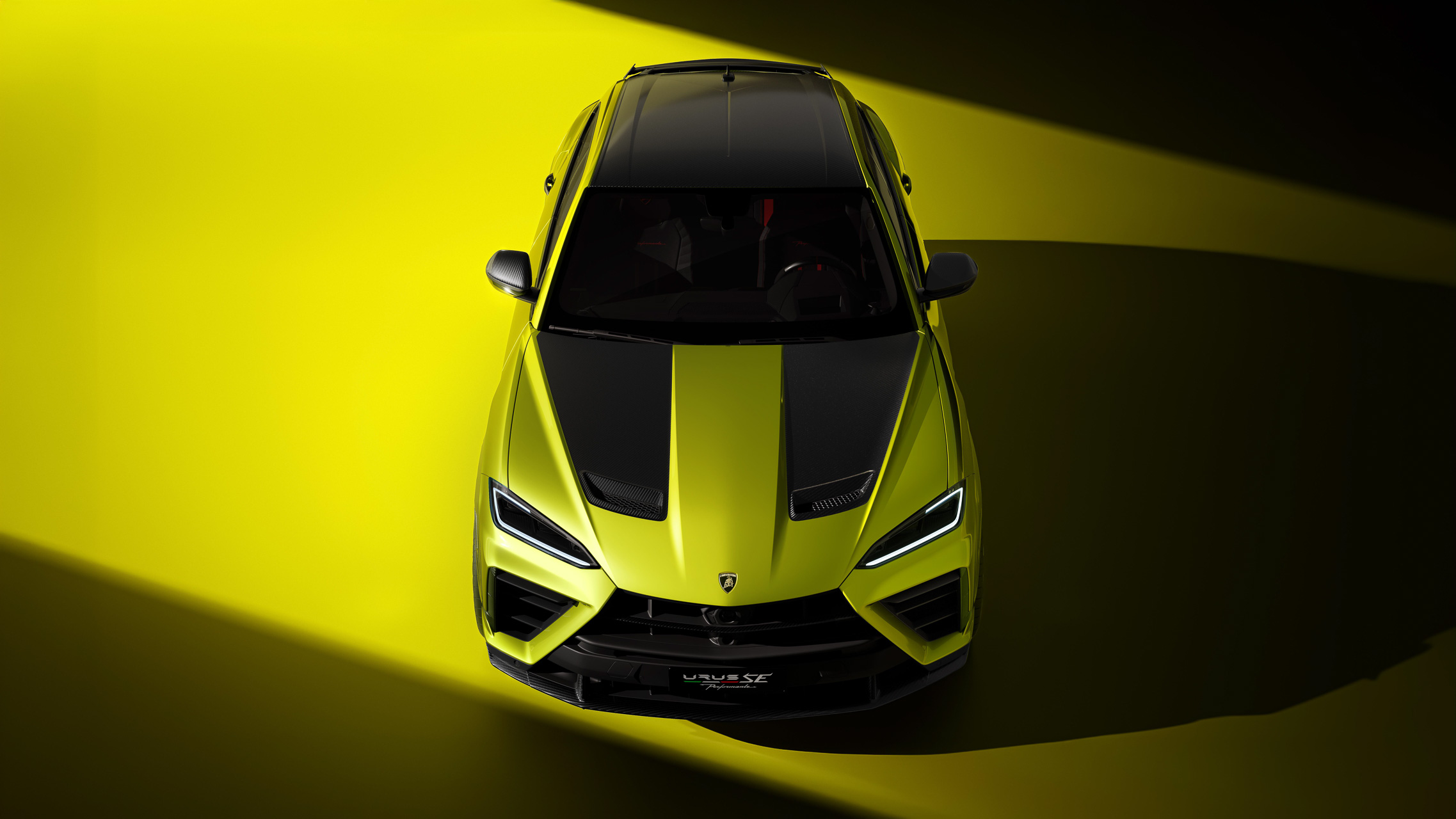
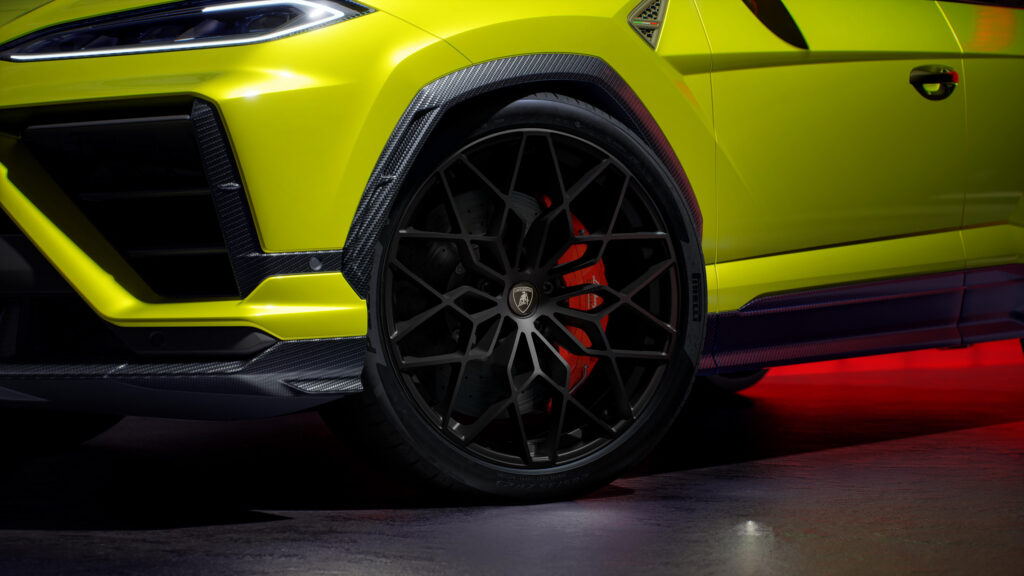
The exterior carries the most exposed carbon fiber of any Urus. The carbon hood adds a central power dome and S-Duct air intakes, a redesigned front splitter and larger intakes feed cooling and downforce, and the rear combines taller upper and lower carbon spoilers with the largest diffuser fitted to an Urus, plus hexagonal detailing referencing the Countach. New 23-inch wheels use an intersecting Y-spoke design, and the launch colors include Giallo Crius and a Verde Hydra matte finish.
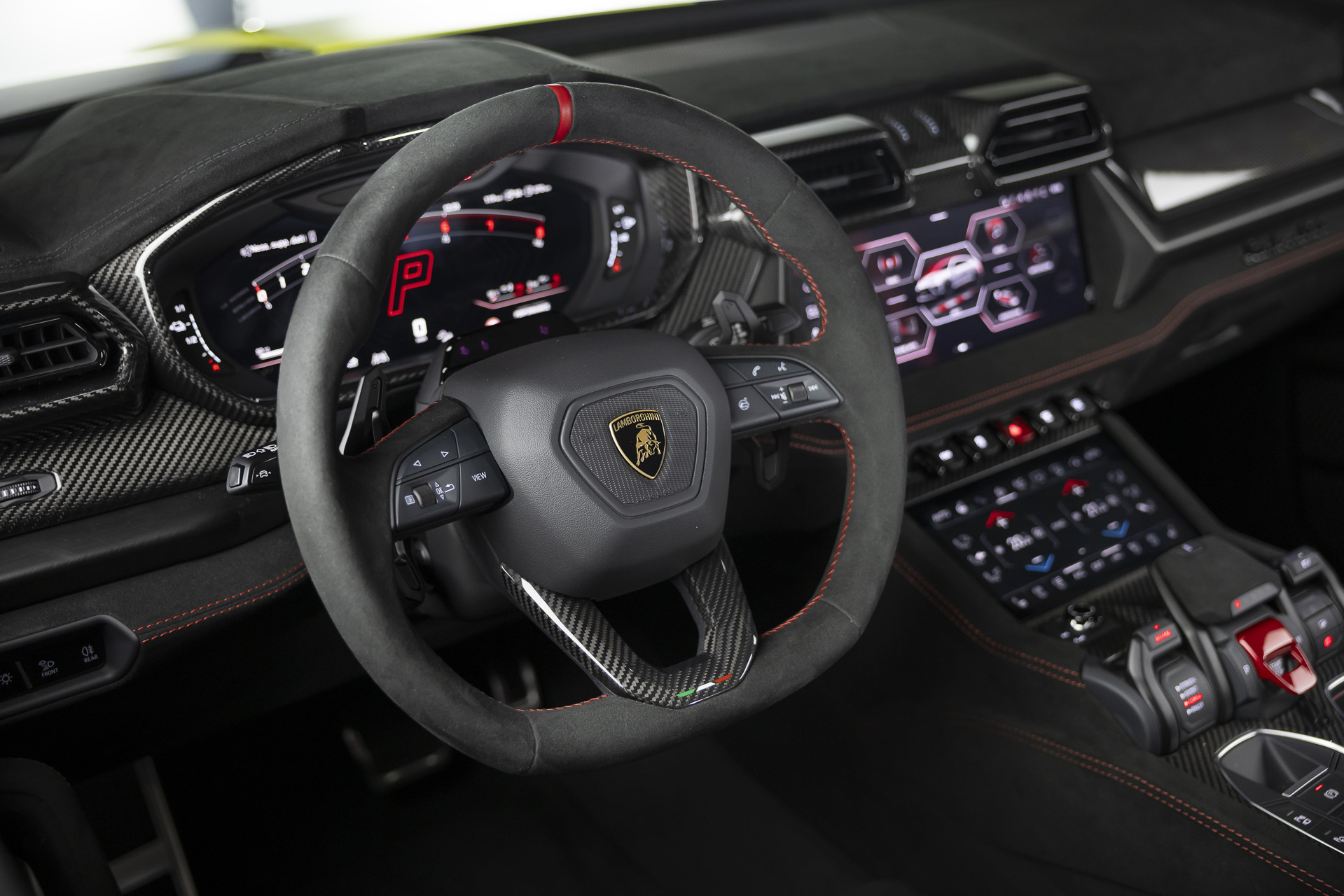
Inside, the cabin follows Lamborghini’s Feel Like a Pilot concept with a 12.3-inch digital instrument cluster and a 12.3-inch central touchscreen running the Lamborghini Infotainment System with graphics derived from the Revuelto. The car adds an aviation-style mechanical button panel, a new steering wheel with a carbon-fiber bezel, Y-shaped anodized aluminum details, a model-specific telemetry system and CorsaTex by Dinamica microfiber trim.
Aerodynamics and cooling
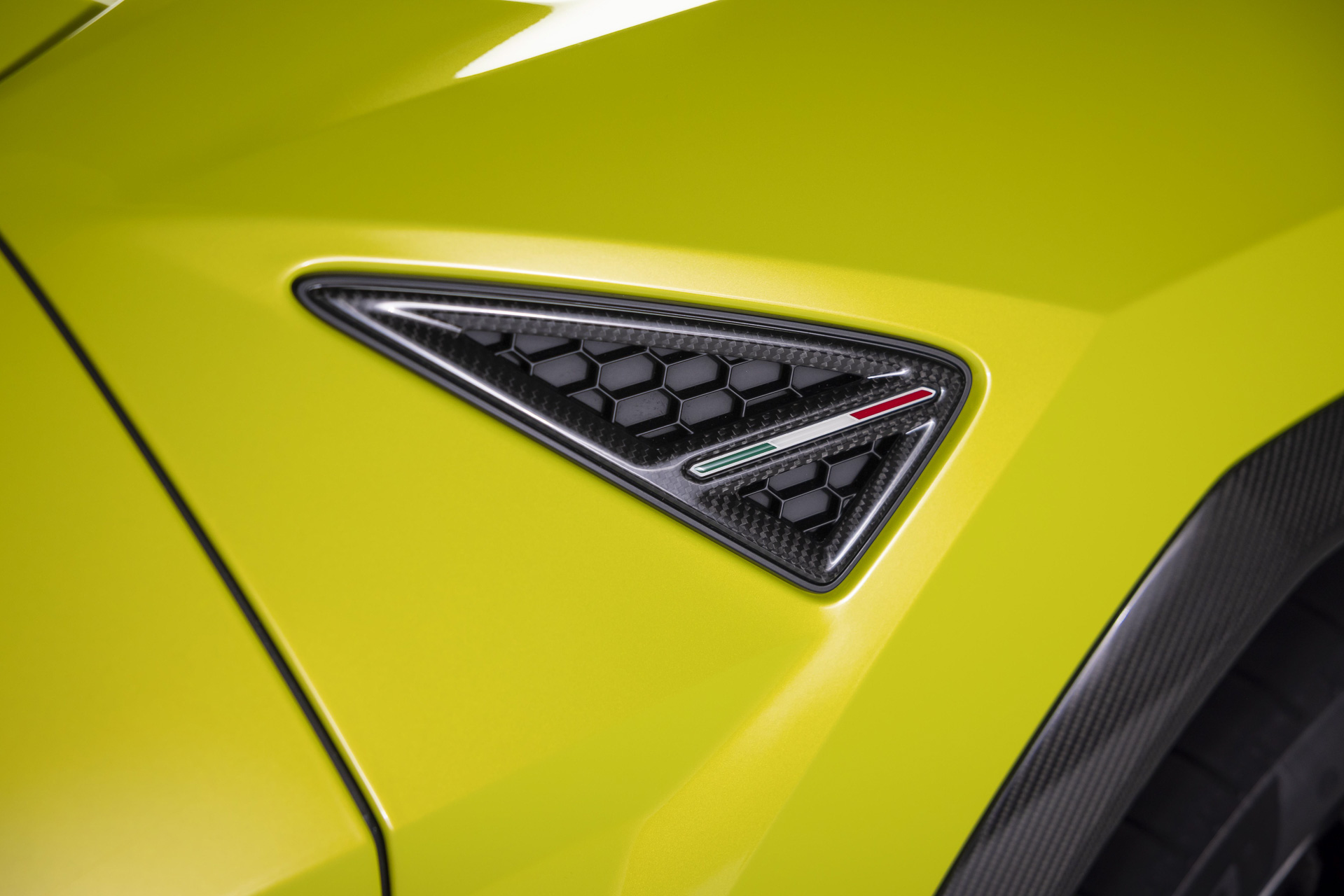
Lamborghini reports a 3 percent reduction in drag against the Urus SE while increasing downforce by 16 percent over the previous Performante and 23 percent over the Urus SE, with front downforce up 22 percent thanks to a new front splitter. A revised cooling setup replaces underbody intakes with S-Duct hood vents, dedicated fender outlets and enlarged wheel-arch vents, and a new NACA duct improves brake cooling by 8 percent over the Urus SE.
Exhaust and tires
The standard titanium Akrapovič exhaust removes the X-cross link between the cylinder banks to run two independent lines, uses 65-millimeter and 76-millimeter tailpipes and integrates two Helmholtz resonators tuned to 124 Hz and 128 Hz. It saves 10 kg over the previous system, and on startup the engine briefly rises to 2,400 rpm before settling. Tire options include Pirelli P Zero in 22-inch and 23-inch sizes and Pirelli Scorpion Winter 2 for cold weather, both using Pirelli Elect technology, with a wider semi-slick 22-inch Bridgestone Potenza Race offered for track use.
GalleryPhotos by Lamborghini