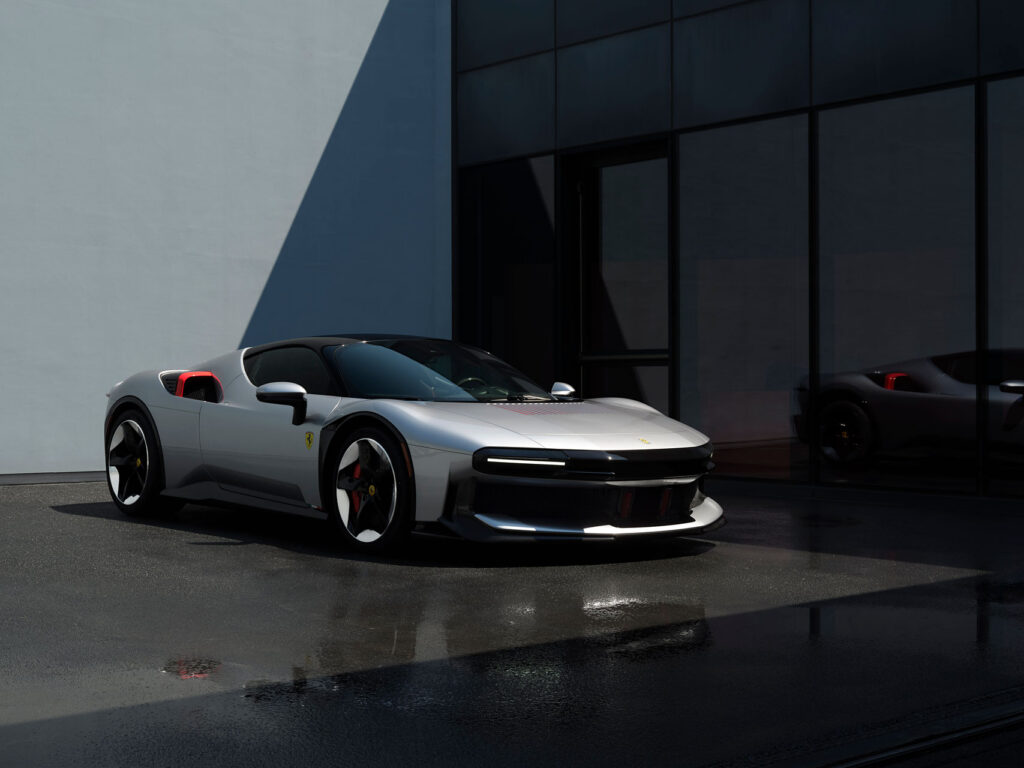
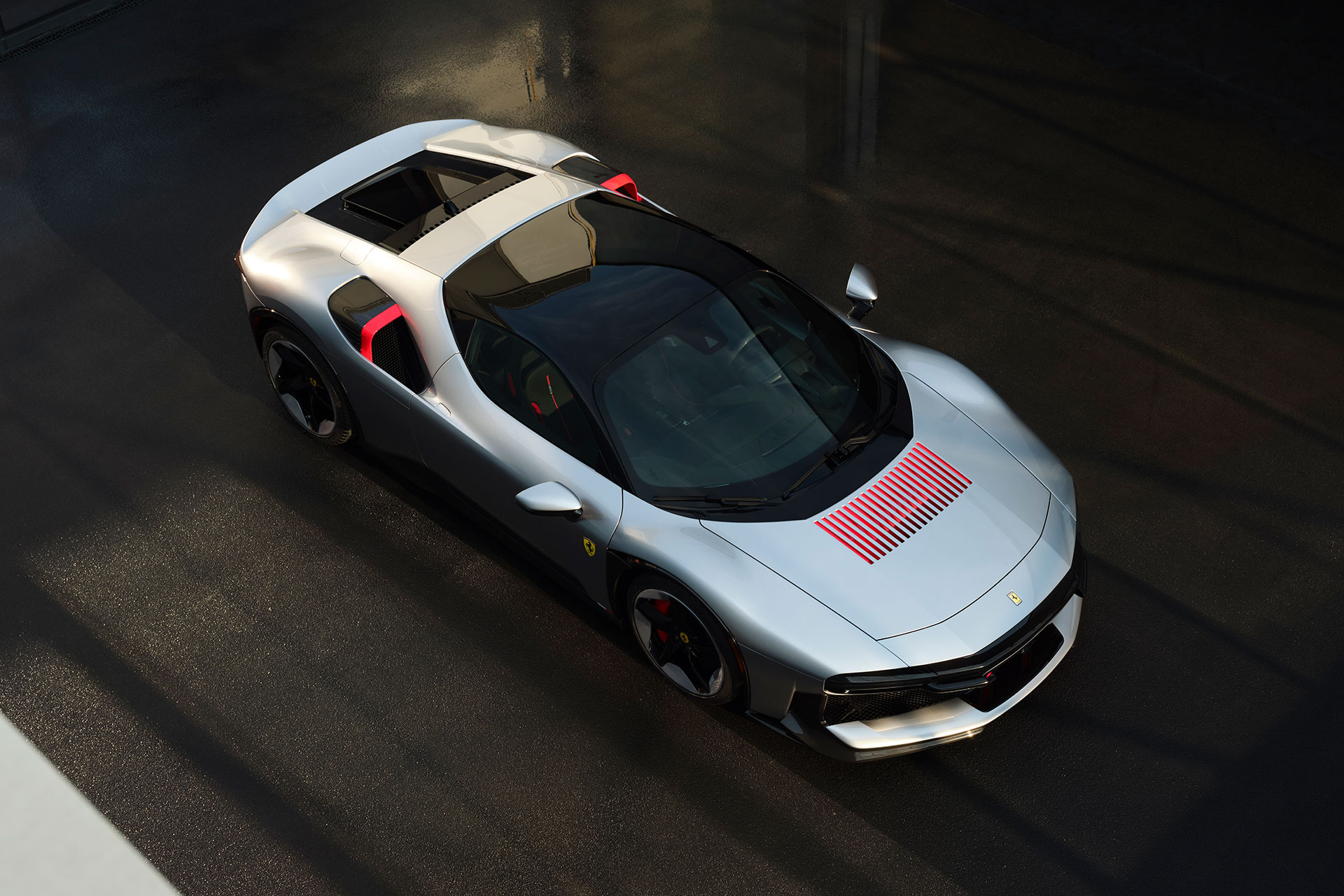
Ferrari revealed the CZ26 at Monterey Car Week on August 13, a One-Off built through the Special Projects program for a US client and designed by the Ferrari Design Studio under Flavio Manzoni. The car is based on the SF90 Stradale and retains its technical specifications, with entirely new bodywork and a reworked interior.
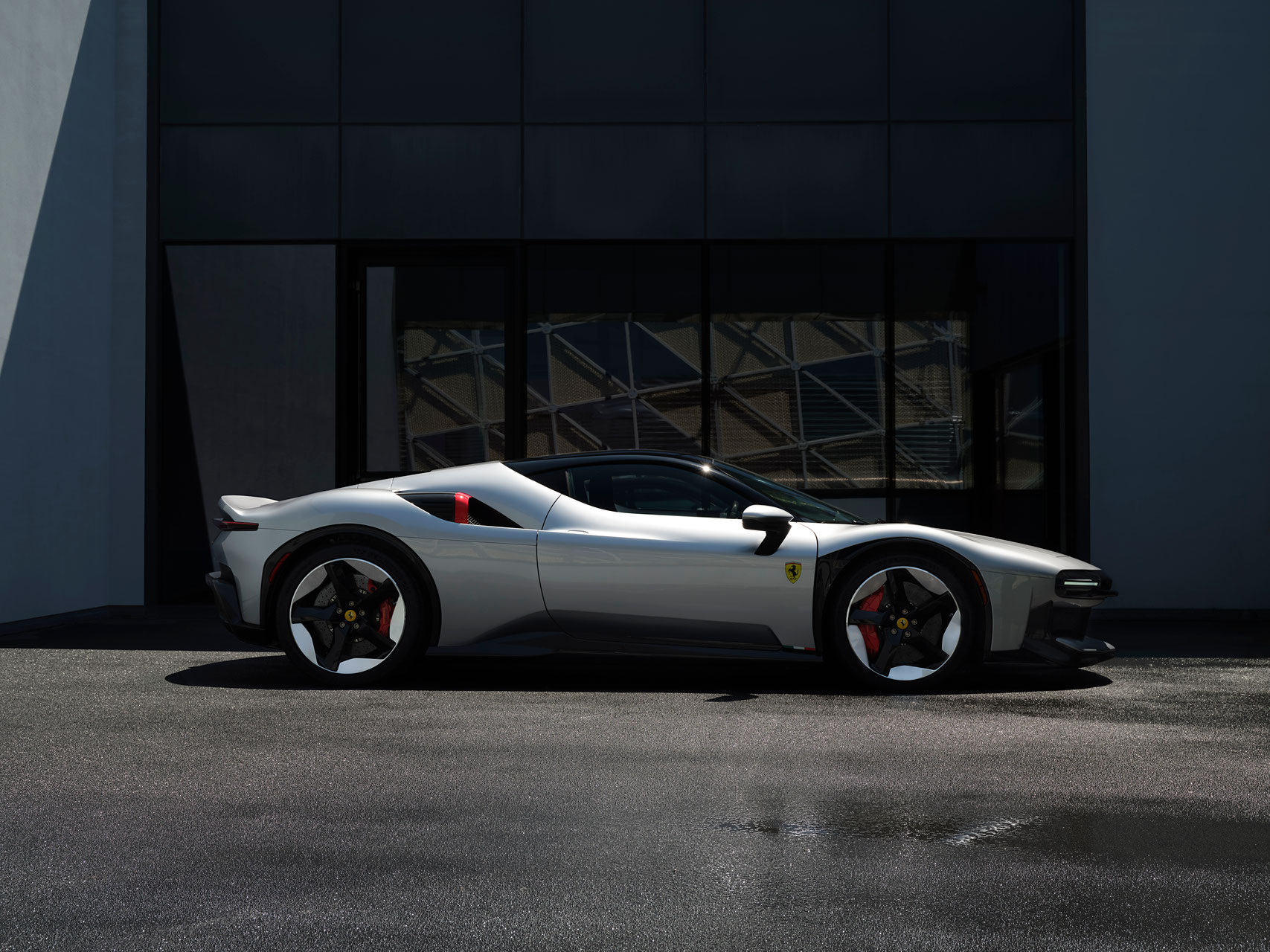
The design is built around a horizontal two-box silhouette, with a central capsule-like passenger cell supported by four muscular volumes at the wheel arches. Ferrari describes the composition as flowing from the front fascia as though the body were an extrusion of a single element, ending in a truncated rear framed by a geometry that mirrors the front. The company cites Italian industrial design of the 1970s as the reference point.
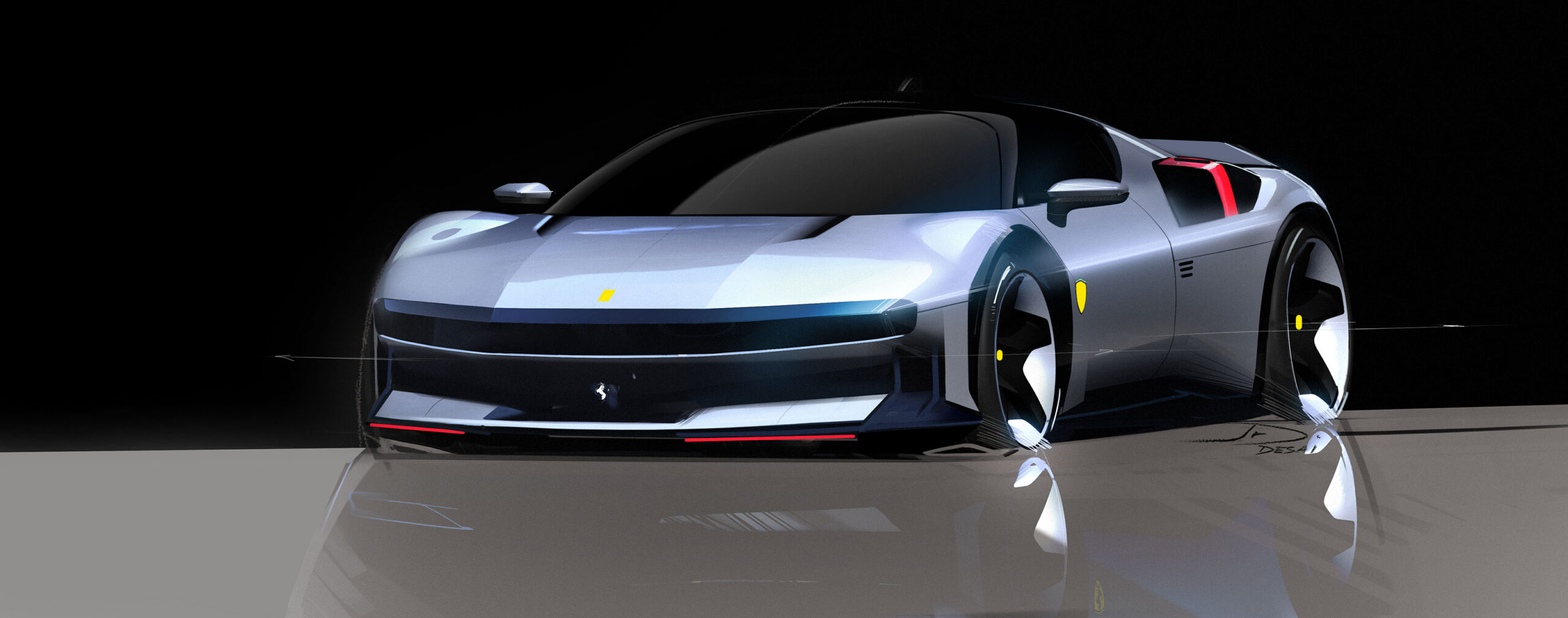
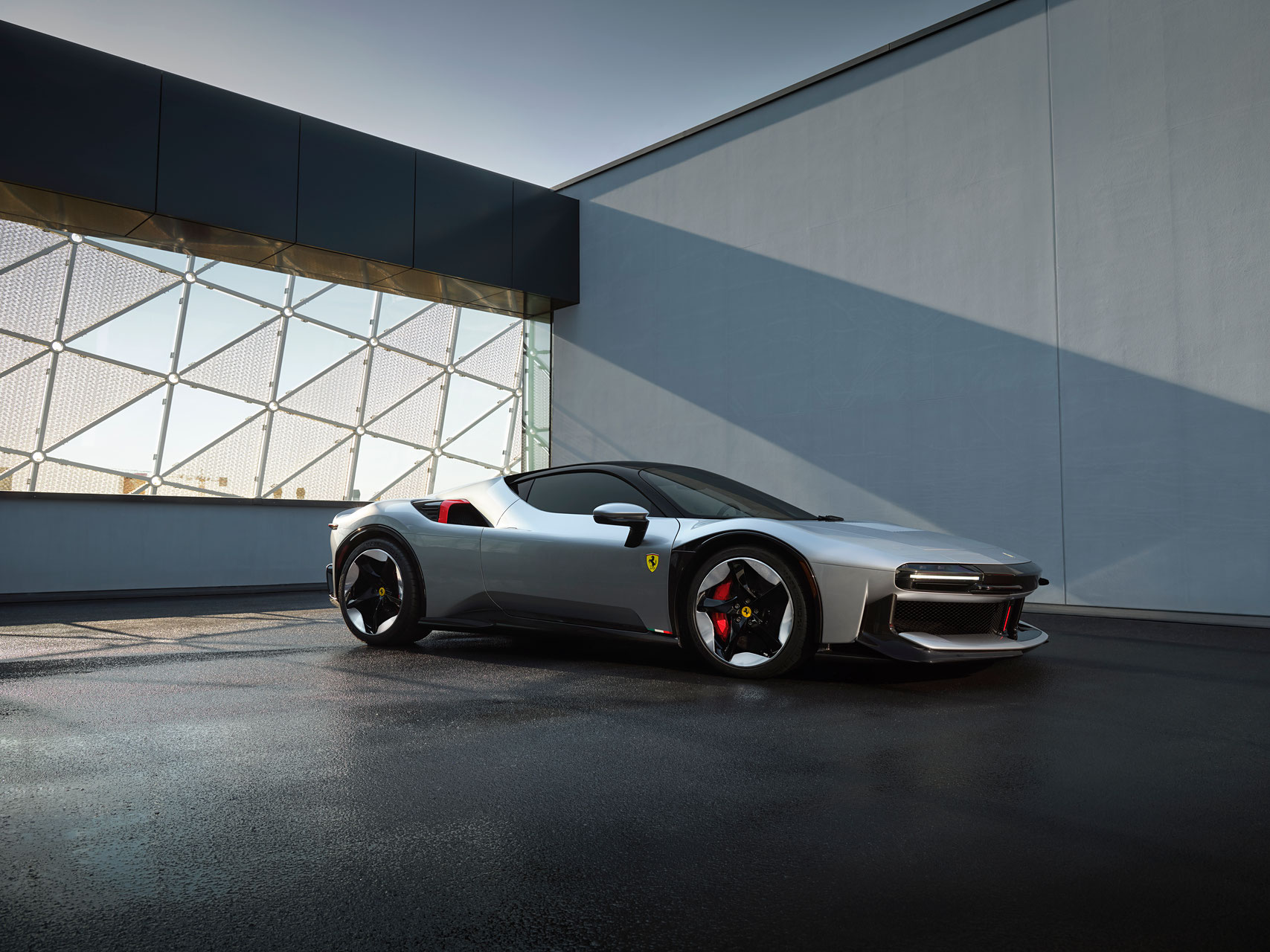
At the front, a full-width functional grille houses ultra-slim lighting modules with a concealed effect, along with brake air intakes, sensors, and other technical components, all underlined by a vertical leading edge. The rear pairs the truncated tail with cantilevered taillights and a diffuser with a pronounced horizontal emphasis intended to visually widen the car’s stance. Side cooling intakes, the diffuser, the light clusters, and the carbon fiber elements extending the wheel arches all emerge directly from the main surface rather than being applied to it. Black trim on the roof and pillars sets the cabin into the bodywork.
The bodywork is finished in Argento Veloce, a silver with a liquid-like effect developed for this car, with Rosso Lampante used on functional and technical details and pigmented carbon fiber elsewhere. The wheels are specific to the CZ26, combining a gloss black painted finish with a shot-peened surface treatment produced by blasting with microscopic beads. Exhaust tailpipes are natural-finish titanium.
Inside, the focal point is a bespoke black technical fabric paired with additively manufactured seat inserts using a pattern developed for this car. Rosso Lampante details carry over from the exterior, and a CZ26 logo is embroidered in the cabin. Ferrari contrasts the matte technical fabric against satin carbon fiber and a gloss carbon fiber with metallic filaments woven into the weave, with body-colored elements on the door panels and the upper dashboard.
Aerodynamic work covers the full car. The front cooling system and airflow management were redesigned by reorienting the central radiator pack and adding bypass ducts, which Ferrari says improves both cooling efficiency and front axle downforce. The underbody and vortex generator system were also redesigned, and the outer sections of the front bumper carry an air curtain system that manages wake from the front wheels to reduce drag. At the rear, a large upper spoiler and dedicated diffuser increase downforce, and the redesigned engine cover adds vents for engine bay heat management.
The powertrain carries over from the SF90 Stradale. Ferrari lists the twin-turbocharged 4.0-liter V8 at 786 hp (797 cv) at 7,900 rpm and 593 lb-ft (804 Nm) at 6,250 rpm, with the electric motors rated at 162 kW, or roughly 217 hp, drawing from a 7.9 kWh battery. Drive runs through an eight-speed dual-clutch F1 gearbox. Ferrari quotes 0 to 62 mph in 2.5 seconds, 0 to 124 mph in 6.7 seconds, and a top speed of 204 mph (328 km/h).
Special Projects commissions begin with a client concept developed alongside Ferrari’s Styling Centre. Once proportions and forms are settled, design blueprints and a styling buck are produced before manufacturing begins, with the client involved through design and verification. Ferrari says the process takes around two years on average.
GalleryPhotos by Ferrari