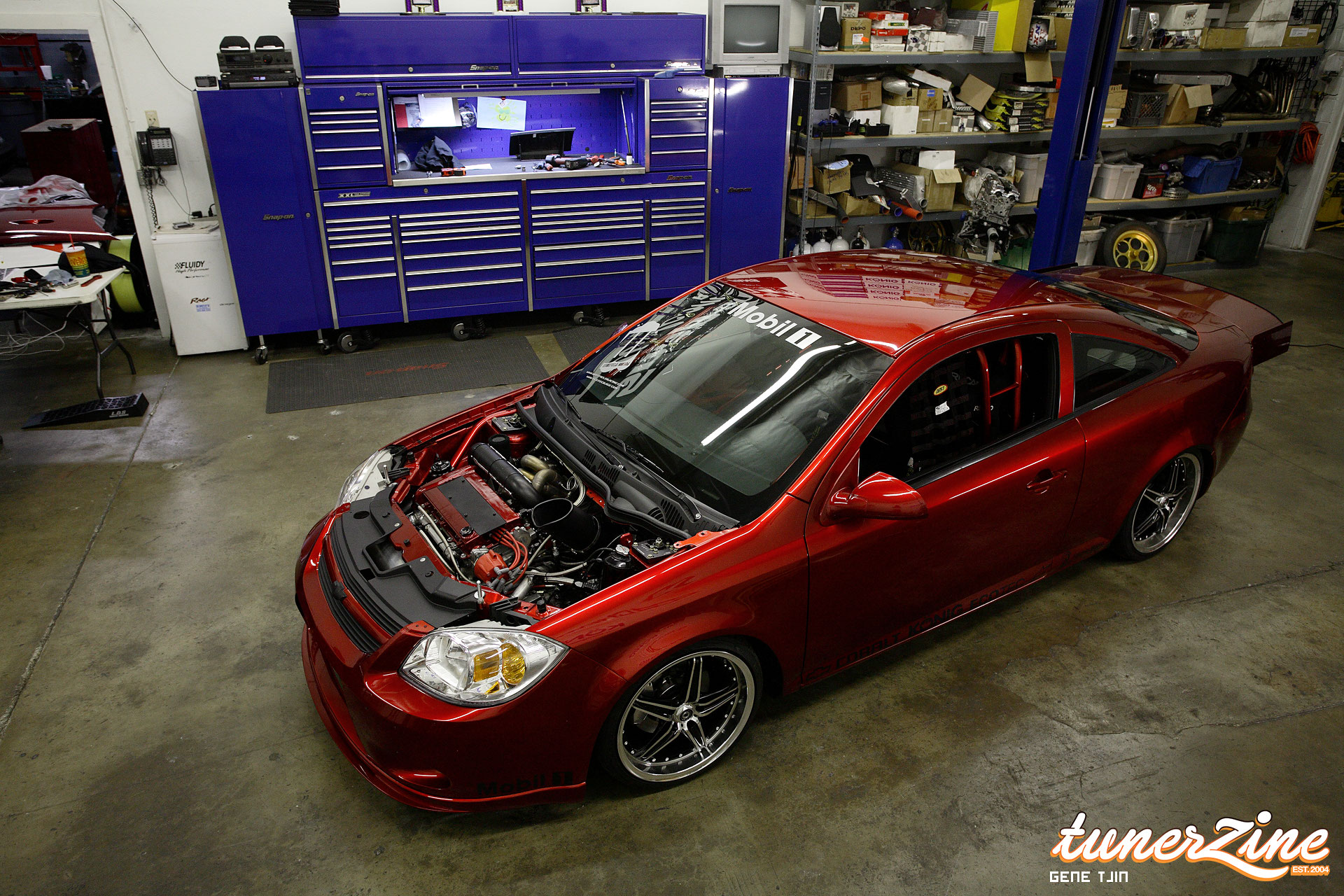
Jason Whitfield’s Chevrolet Cobalt was the cover car for the February 2007 issue of Hot Compact & Imports, with Neil Tjin writing the story and Gene Tjin shooting it across several pages. The headline called Whitfield “the man, the myth, and the legend,” while the deck immediately admitted the second and third parts might have been a stretch for someone his age. The story itself was about a shop that had spent years building fast Hondas deciding to build a 1,000 hp Chevrolet instead, then driving it to In-N-Out between races.
Whitfield started his business out of his garage in 1995 under the Rage Performance name. According to HCI, the shop’s turbocharged CRX put him on the drag racing map in 1998 with some of the quickest Honda numbers in the country at the time. Many might remember his SOHC CRX on the cover of the April 1998 issue of Turbo magazine. By 2007, the operation had become Whitfield Racing, complete with an in-ground dyno, a full fabrication shop, and its own line of Rage Racing parts. In 2006, General Motors chose Whitfield and his crew as its primary California team for building awareness around the Cobalt, and this 2006 model was the result. HCI described it as a nine-second car that still got driven around town regularly.
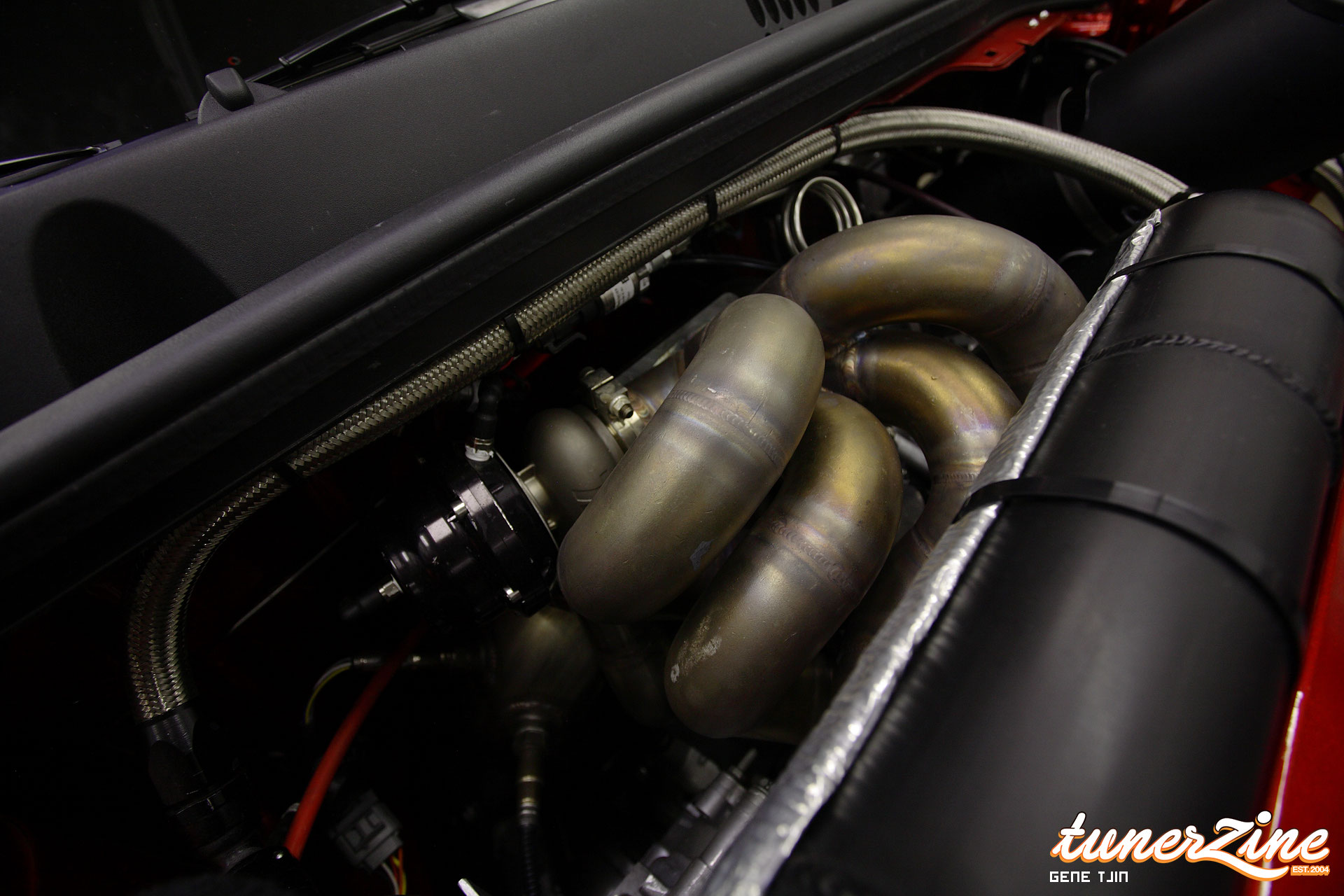
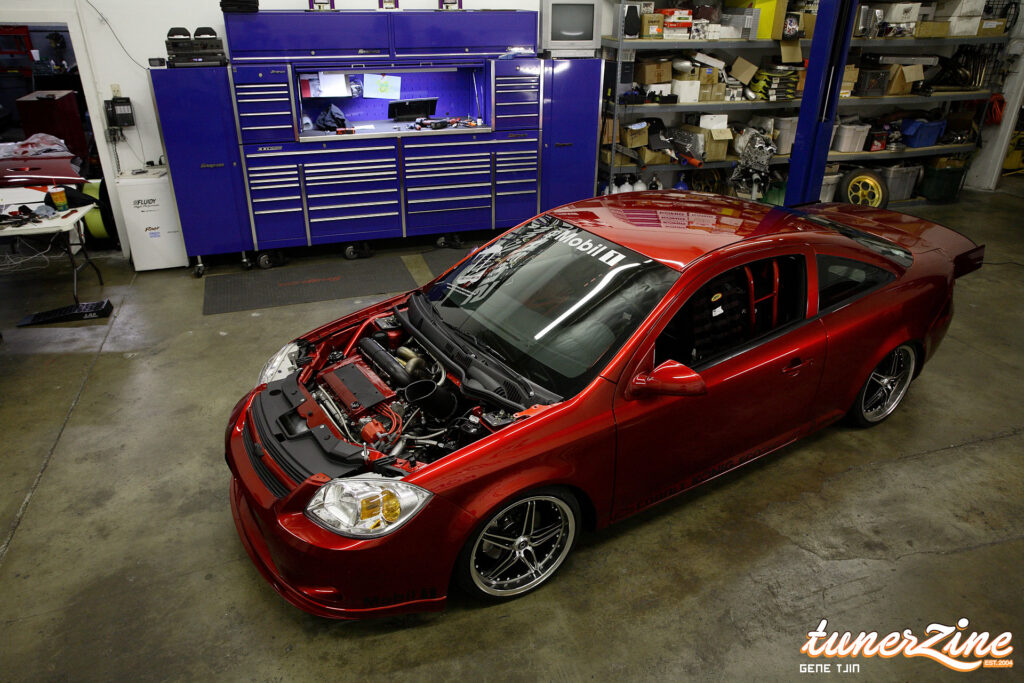
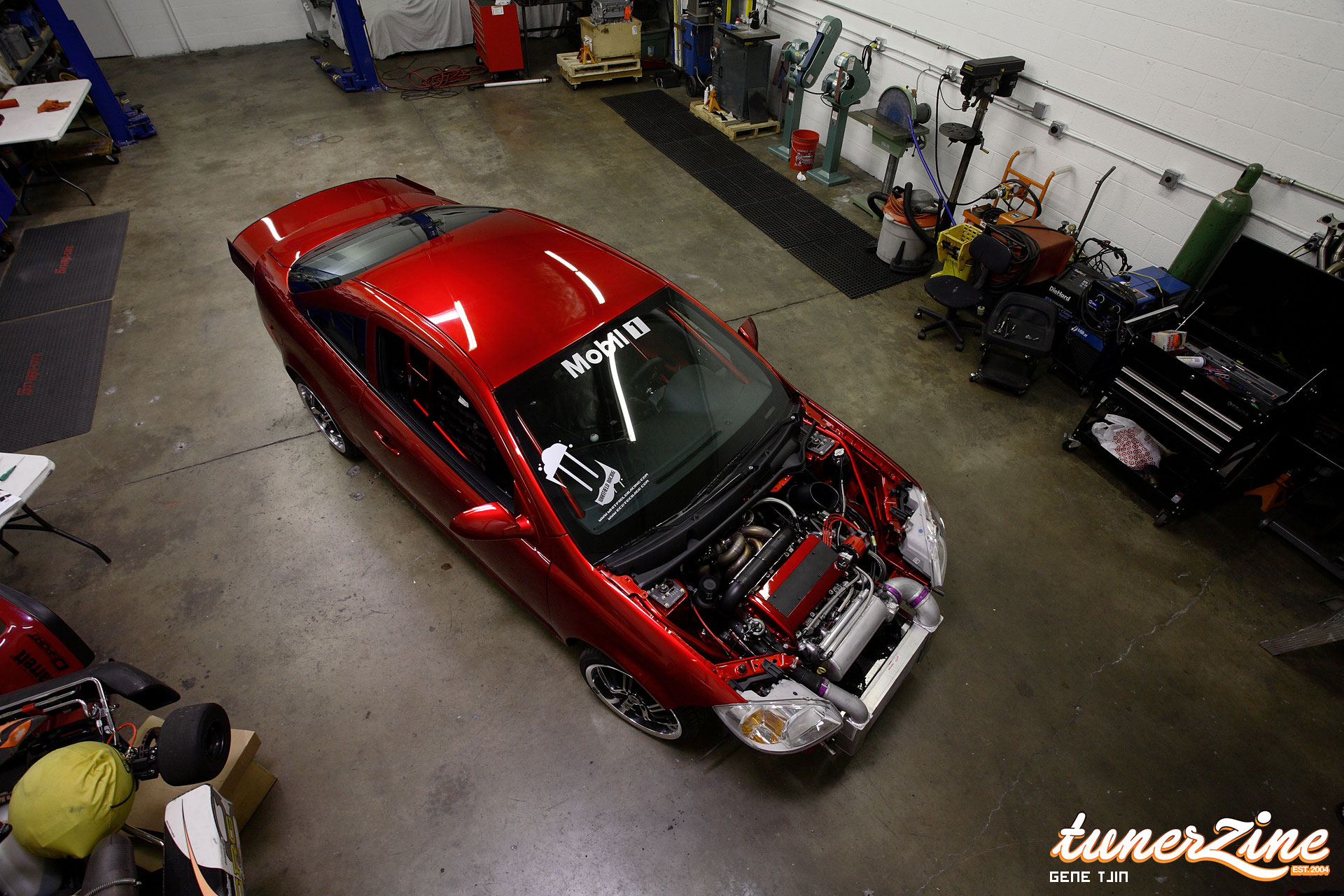
Under the hood was a 2.2-liter GM Ecotec, fully built but still at its original displacement, with HCI putting output at more than 1,000 hp. The stock version of the engine made 145 hp and revved to 6,500 rpm, which gives some idea of how far Whitfield Racing took it. Since putting that much power down through the front wheels was always going to be the challenge, boost was staged by gear. First gear ran around 14 psi for roughly 540 hp, second jumped to 21 psi for around 700 hp, and third got the full 30 to 35 psi, with the engine revving to 9,800 rpm.
HCI also pointed out that every internal engine part was an off-the-shelf component, which was part of what made the project useful to GM. A Full-Race tubular stainless steel manifold with twin V-band clamps fed a Precision GT42R turbo, while two TiAL 44mm wastegates controlled boost pressure. Whitfield Racing fabricated the 3-inch aluminum turbo piping, which ran through a custom PWR intercooler measuring 24 by 3 by 11 inches before reaching the throttle body. The piping was anodized black and joined with Wiggins clamps. Cooling came from a custom radiator built around a PWR core measuring 22 by 10 by 3 inches, with Rob Miller of Sinister Race Cars in Upland designing the end tanks for both the radiator and intercooler.
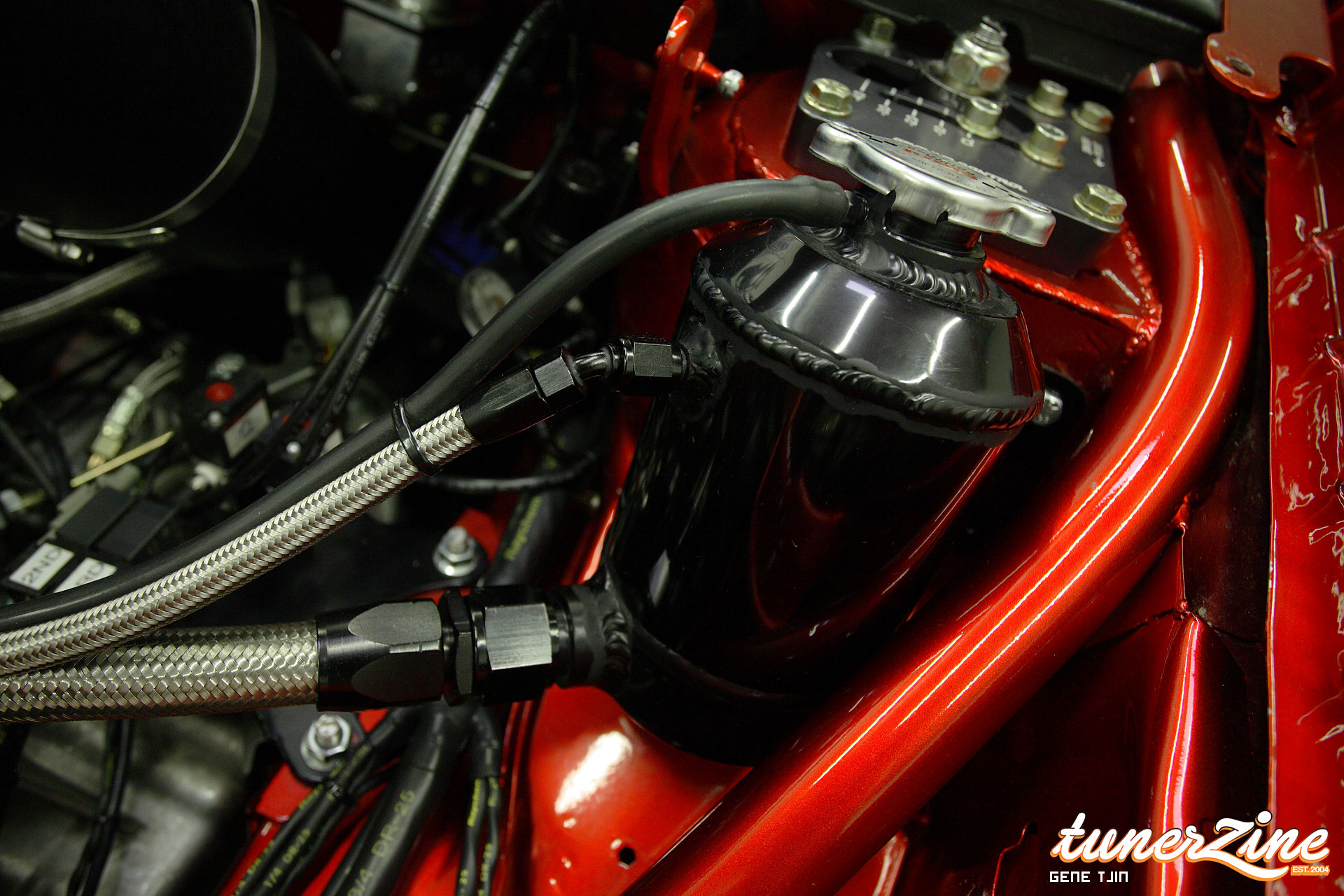
Boost control used CO2 instead of a conventional electronic setup. According to the original story, Whitfield Racing had dealt with enough traction and boost-control problems on high-horsepower cars that it began using compressed gas control on every boosted build. The idea was to hold the exact boost level requested in each gear regardless of traction or changes in air temperature. Fuel and ignition were handled through an XFI engine management system, while the transmission was a GM Hydramatic automatic that HCI said had been tested beyond 1,000 hp. The factory differential was replaced with a torque-biasing unit.
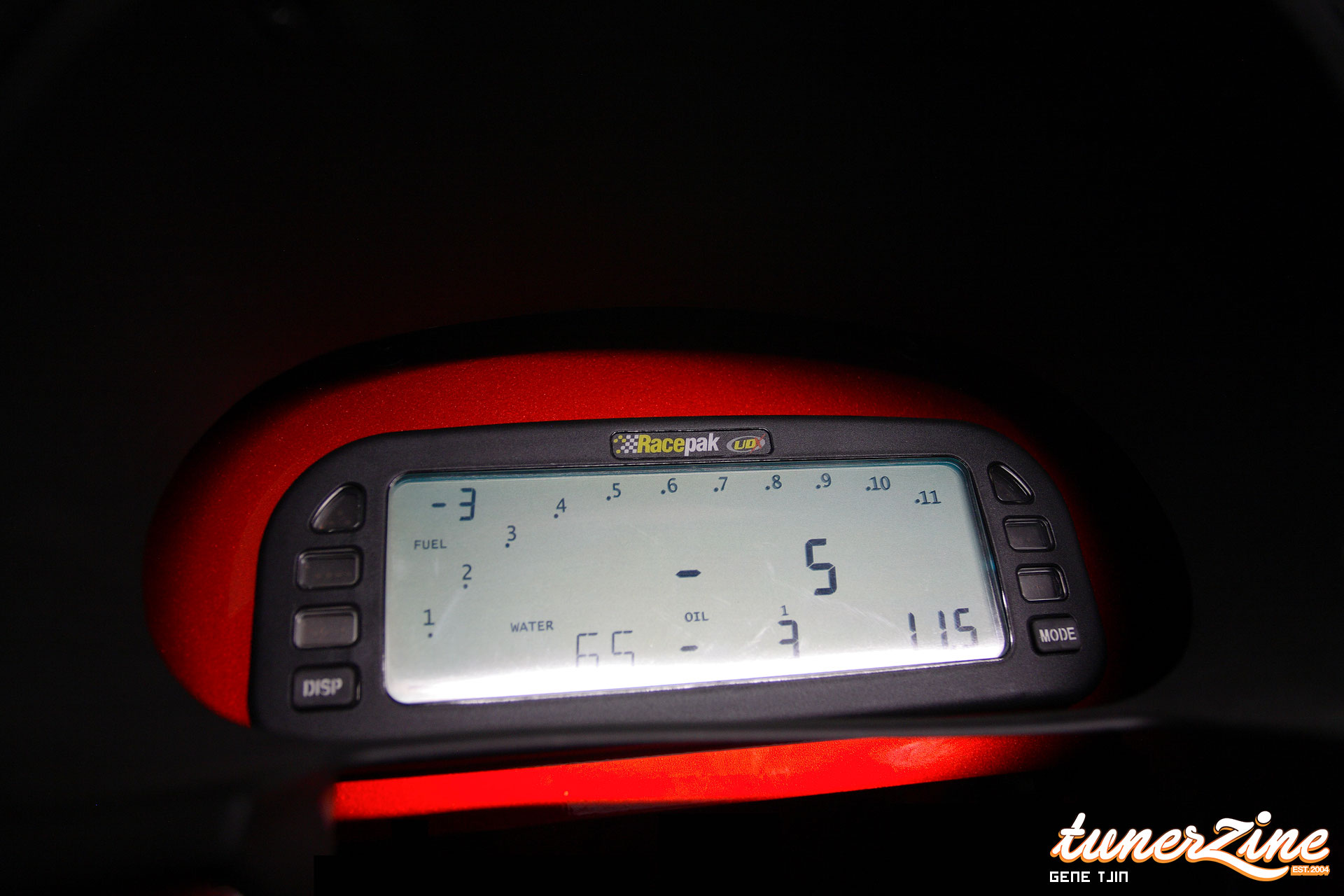
The wiring received more attention in the feature than almost any other part of the car. James Lin spent more than 100 hours rewiring the Cobalt with a Raychem harness, removing every piece of factory wiring and using Weather Pack connectors throughout. Every section was also labeled to make troubleshooting easier. The car ran two of every sensor so the RacePak data logger could have its own MAP, air temperature, fuel pressure, and oil pressure readings without sharing signals with the engine management system. A RacePak digital dash replaced the factory cluster, and Whitfield kept refining the setup until the e-brake light, turn signals, tach, oil pressure, fuel pressure, air-fuel readout, and backlighting all worked.
Whitfield also didn’t want the cabin to look like a stripped race car. Stitch Craft Interiors covered the factory Cobalt interior, including the dash, rear seat, and headliner, in black carbon fiber material, with red suede used on the door panels. Several of the dash plastics were painted to match the candy finish on the exterior. The factory radio, CD player, and DVD player remained functional, while two Recaro seats with matching belts replaced the stock front seats.
Running through all of that was a 4130 chromoly cage built and TIG-welded by Pauly’s Kustom Roll Cages. It included a dual funny car cage for both driver and passenger, twin window nets, dash mounts, steering column supports, and mounts for front and rear cameras. A slip tube on the passenger side gave the crew access to the rear of the car, and the cage also included mounting points for a parachute and wheelie bars. NHRA certified it for 8.50-second passes at 180 mph. Jason Gamble at Gampro Paints then spent more than 10 hours painting the cage to match the candy apple exterior.
Rob Miller also laid out the braking system, which used Lamb Brakes hats and calipers. Up front, GM Grand Am knuckles were used to carry 930 CV axles, along with larger ARP wheel studs and black 12-point lug nuts. The rotors and calipers came from a 1994-and-up Camaro, moving the Cobalt from single-piston to four-piston calipers. HCI put the weight savings from the billet components at roughly 20 pounds.
The factory brake lines were replaced with stainless braided lines, and the original brake booster was removed in favor of a 1-inch CNC master cylinder with a reservoir. Lines from the master cylinder were converted to stainless hard lines, and a staging brake was installed in the factory e-brake location so the interior still retained a mostly stock appearance. Even with all the race hardware, Whitfield clearly wanted the car to look finished rather than gutted.
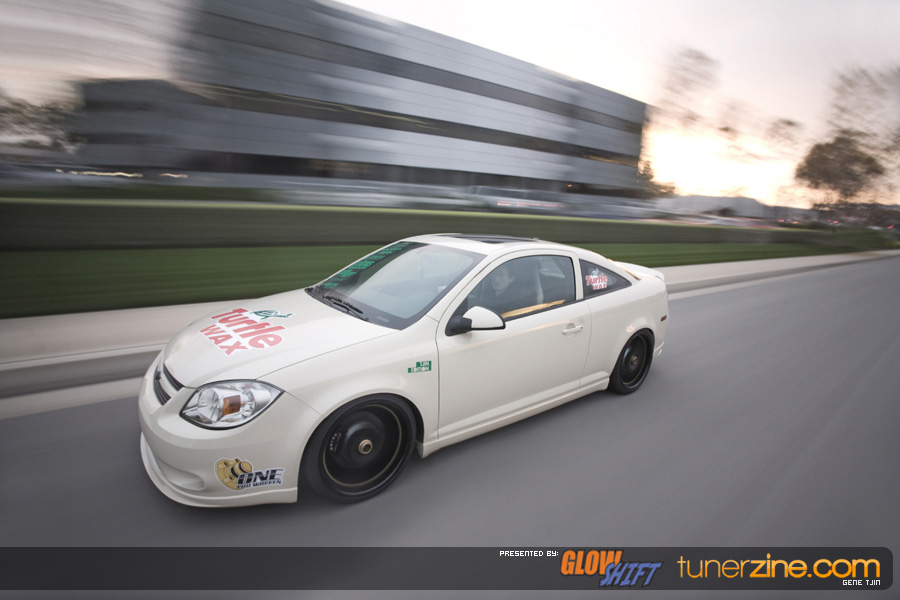
For shows, the Cobalt ran two different Konig wheel designs at the same time. One side wore 18-inch Sideways wheels, while the other had 18-inch Unknowns, all on Falken tires. Whitfield liked the setup because it made people at shows stop and look twice. At the track, those came off in favor of 15×9 Weld wheels finished in anodized black and wrapped in 26x10x15 Mickey Thompson front drag slicks.
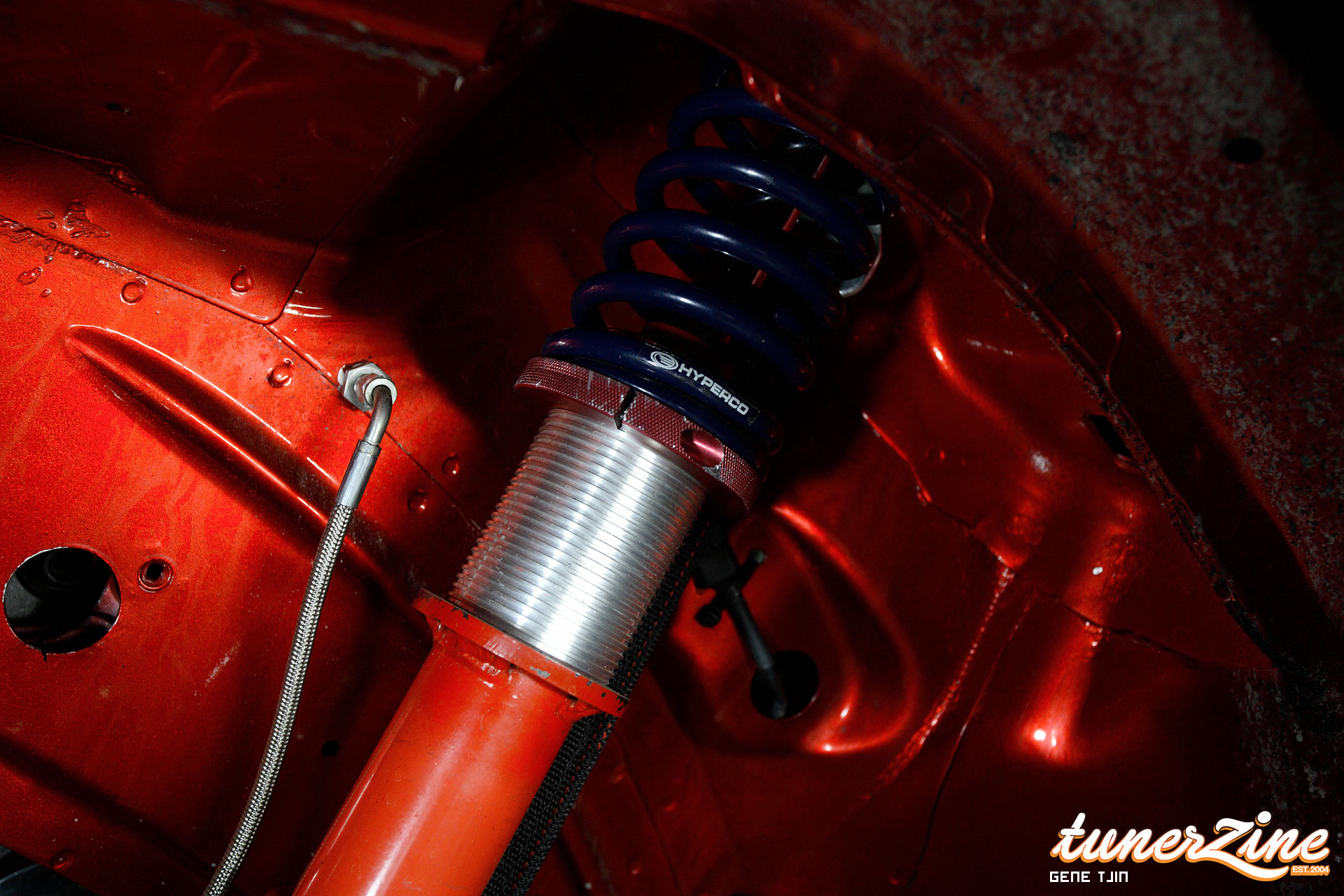
The suspension was built to let the crew switch between street and race setups. KYB adjustable front struts used Hypercoil springs on slip-over adjusters, while Koni adjustable rear shocks were set up the same way. A Mark Williams sway bar assembly up front helped keep the car straight under power. A sidebar in the original feature also covered Whitfield’s relationship with Mobil 1, which had already been going for a year and was expected to continue through 2007.
By the time the issue went to print, the Cobalt had already run several nine-second passes and won the IDRC event at California Speedway. Whitfield used the feature to thank his wife Amber and son Seth, Todd Christensen and Carmen Smith, James Lin Consulting, GM Racing, Konig Wheels, Alpinestars, Pauly’s Kustom Roll Cages, Rob Miller at Sinister Race Cars, and Andy Williamson of Theory Communication and Design.
HCI ended the story by comparing the Cobalt to the CRX that had helped put Whitfield on the map nearly a decade earlier. The prediction was that the Cobalt would do the same thing again, only bigger and faster. Looking back at a front-wheel-drive street car making more than 1,000 hp and running nine-second passes in 2007, that didn’t seem like much of a stretch.
GalleryPhotos by Gene Tjin