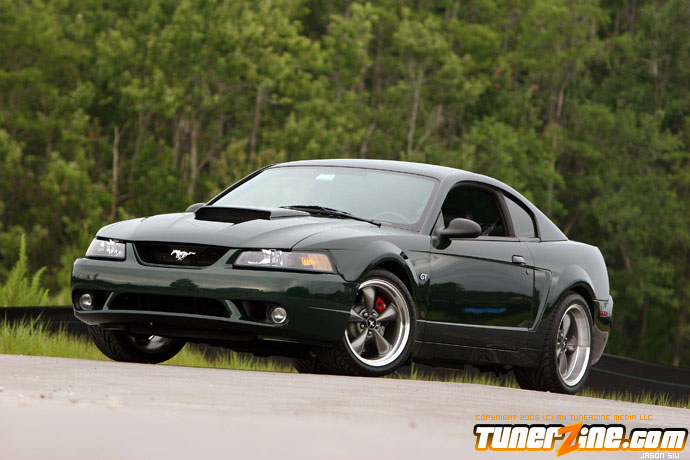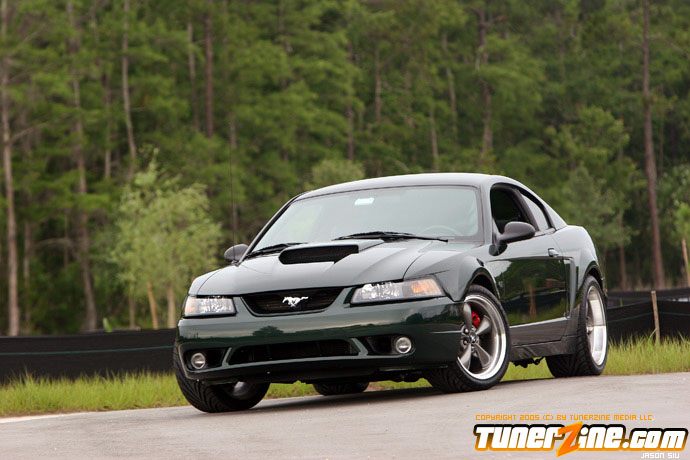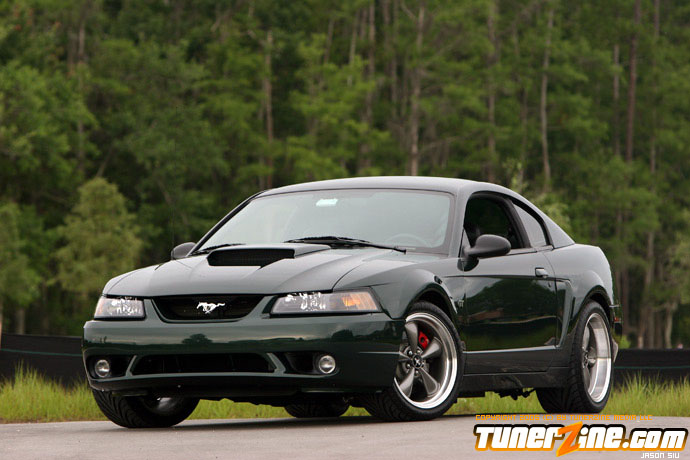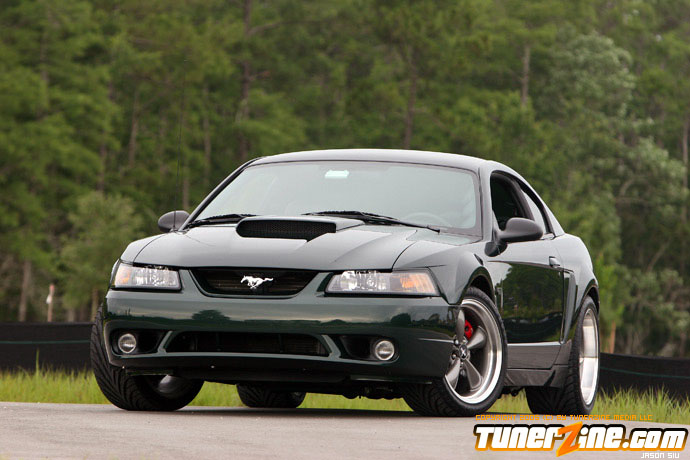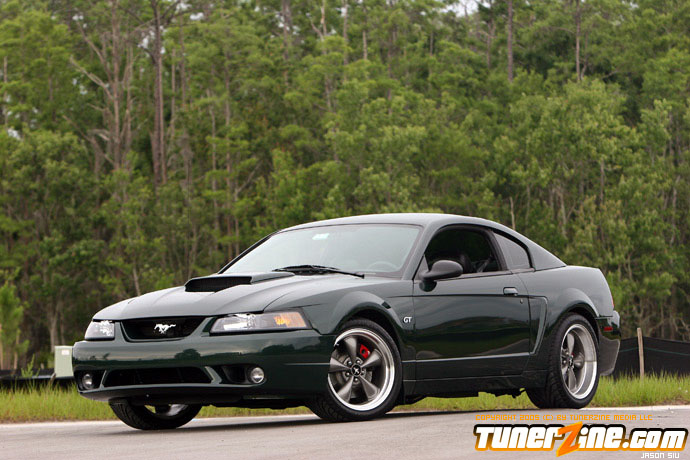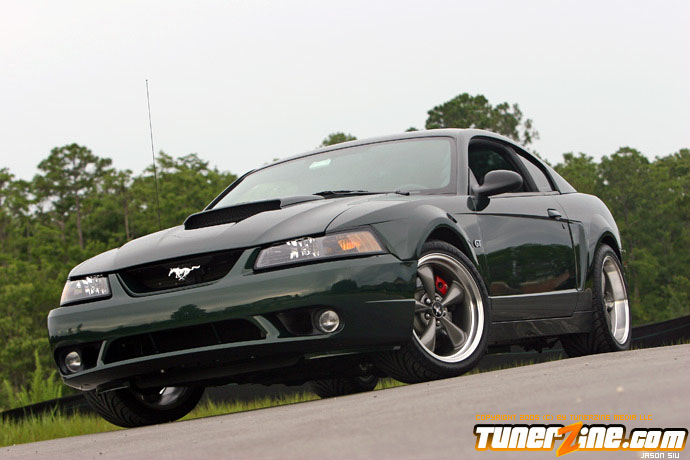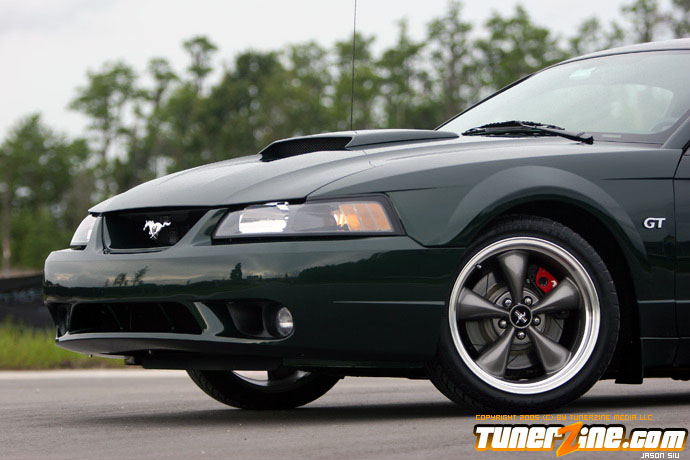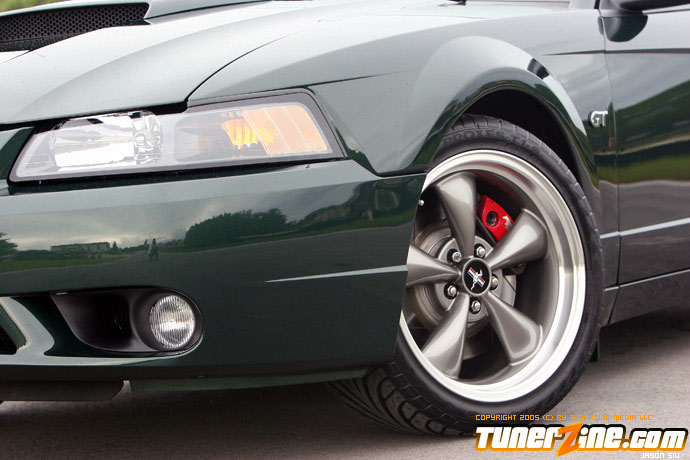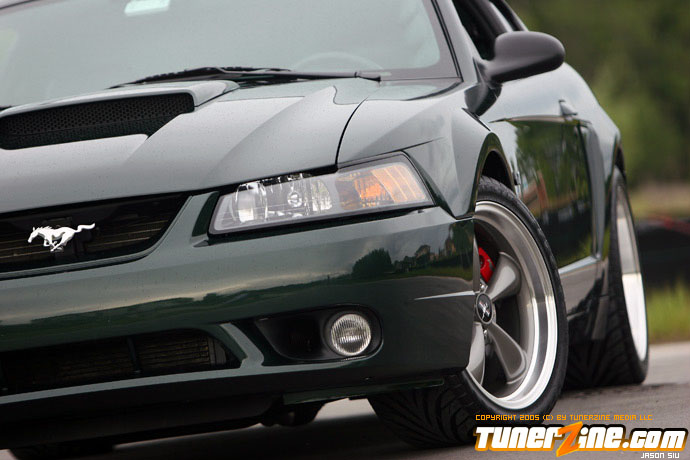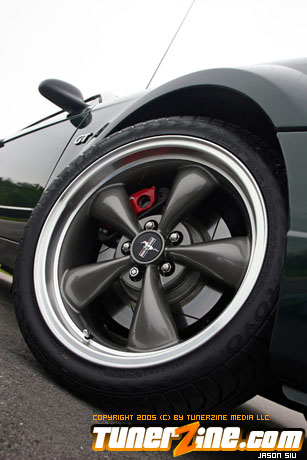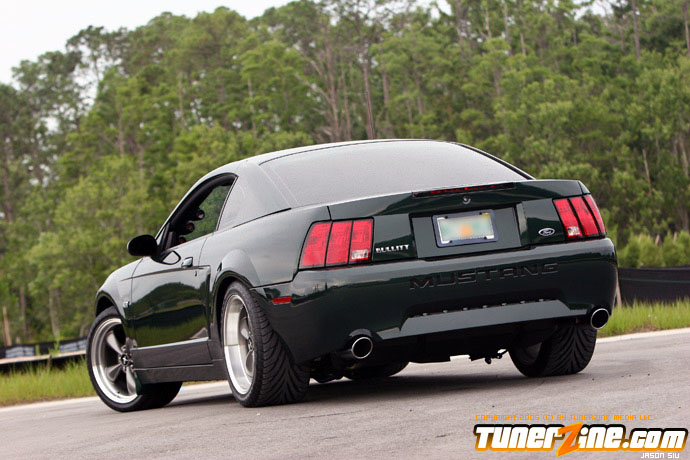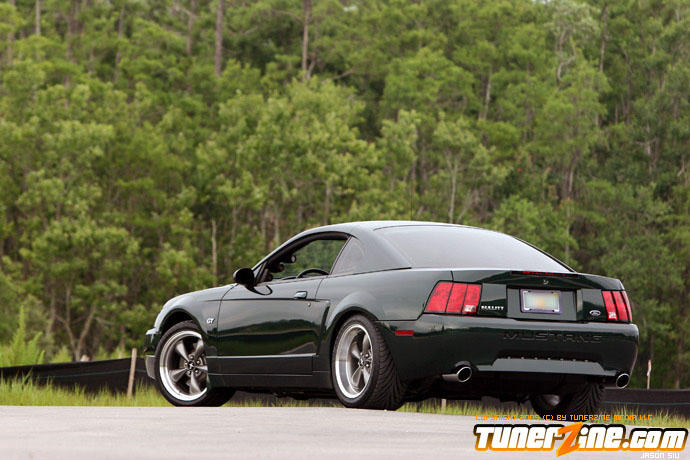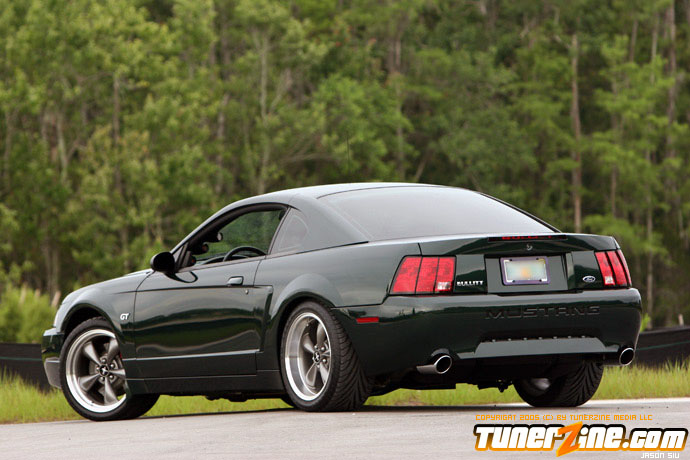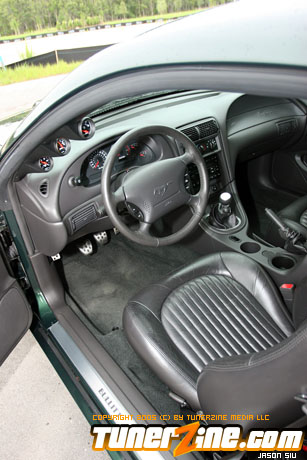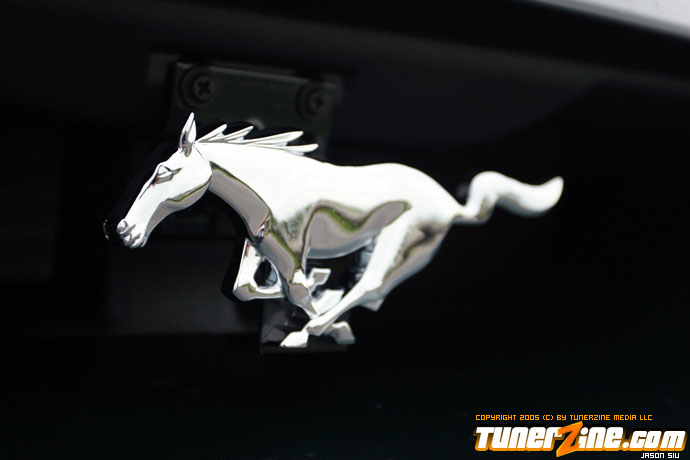
Before 2001, Ford only offered the Mustang Cobra model above the GT, which sold for 20-30% higher premium. Ford realized there was a demand for a Mustang that bridged the gap of the GT and Cobra models in both performance and price, so in 2001, the Mustang Bullitt was born. The name Bullitt comes from the 1968 movie Bullitt starring Steve McQueen. The movie features a car chase scene involving a 1968 Mustang fastback that is still considered impressive for today’s standards. This famous car chase gave Ford the idea of the first “special edition” Mustang. Ford introduced the Bullitt in three colors, the most popular being Dark Highland Green, a near match to the 1968 Mustang from the movie Bullitt. In addition to the unique color, Ford went even further for the unique look by leaving the trunk lid wingless, removing the front fog lights, adding unique rocker panels and C-scoops, 60’s style text format of the gauge cluster, 60’s style stitching on the seats, and aluminum interior accents. To round off the package, they installed a high flow aluminum intake manifold, twin bore throttle body from the Cobra, higher flow mufflers, underdrive alternator and water pump pulleys, subframe connectors, lowering springs with a higher rate, unique sway bars, Tokico shocks, and the Cobra braking system with unique powder coated calipers. Although the changes were subtle, they gave the Bullitt a unique look and performance edge over the GT model. By the end of 2001, Ford had built 5582 Bullitts. Even though the model was popular, they did not continue the Bullitt after 2001. In 2003 Ford released the Mach 1 mustang, which followed the same idea as the Bullitt, just a slightly different combination.
Rob Hoffman decided in 2004 to add a Bullitt Mustang to his current Ford car corral, which included a well modified 1993 Mustang GT. The Bullitt was to be for more daily transportation as well as some open track road race events. He found a mint condition, 3500-mile car after a couple months of searching. Right off the bat, he knew the car needed some performance tweaking. First he installed 3.73 gears, SLP long tube headers with matching x-pipe, cold-air intake, Predator programmer, underdrive crank pulley, rear control arms, bump steer kit, camber/caster plates, bigger rear sway bar, 1995 Cobra R springs, and 18×9, 18×10 Wheel Replica Bullitt wheels. The car responded well with the new parts. Quarter mile performance improved from 13.9@100.1 stock to 13.4@102.9. On the road course, overall feel and handling were greatly improved with the minimal suspension modifications.
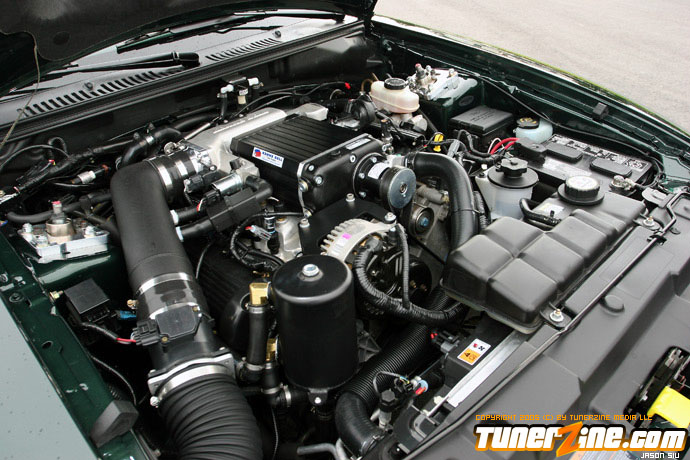
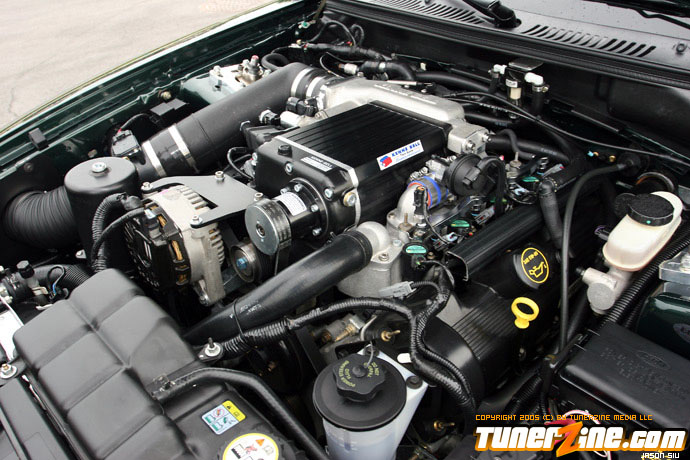
Unfortunately, driving the 390 WHP naturally aspirated 93 GT made the Bullitt a little uneventful. The 93 GT was more drag race oriented with softer springs and shocks, along with 4.10 gears, so it was a different animal, even on the street. After a few events, he began enjoying road racing immensely.so much so, he decided two Mustangs were too much, so he let the 93 GT go. Doing so meant he’d lose the faster of the two cars, so more power was a must on the Bullitt. Using the funds from the sale of the GT, he purchased the new Kenne Bell 1.7L intercooler supercharger kit. To help support the power, he stepped up to Moser 31 spline axles and Ford Racing differential, 3.31 gears, RPS aluminum flywheel, Centerforce Dual Friction clutch, 03 Cobra radiator, 03 Cobra dual fuel pumps and fuel tank, and a Ford Racing aluminum driveshaft. The car now replicated the power of the 93 GT with an estimated 400 RWHP and 410 lb/ft of torque at 9 psi. The combination has only been together long enough to break-in the clutch and work out the bugs of the new parts. He’s looking forward to getting the car on a dyno as well as to the drag strip to better prove what the car is capable of. However, the Bullitt’s forte will be hammering down the back straights of Sebring International Raceway in car chase fashion replicating what this Mustang was designed after.
Gallery